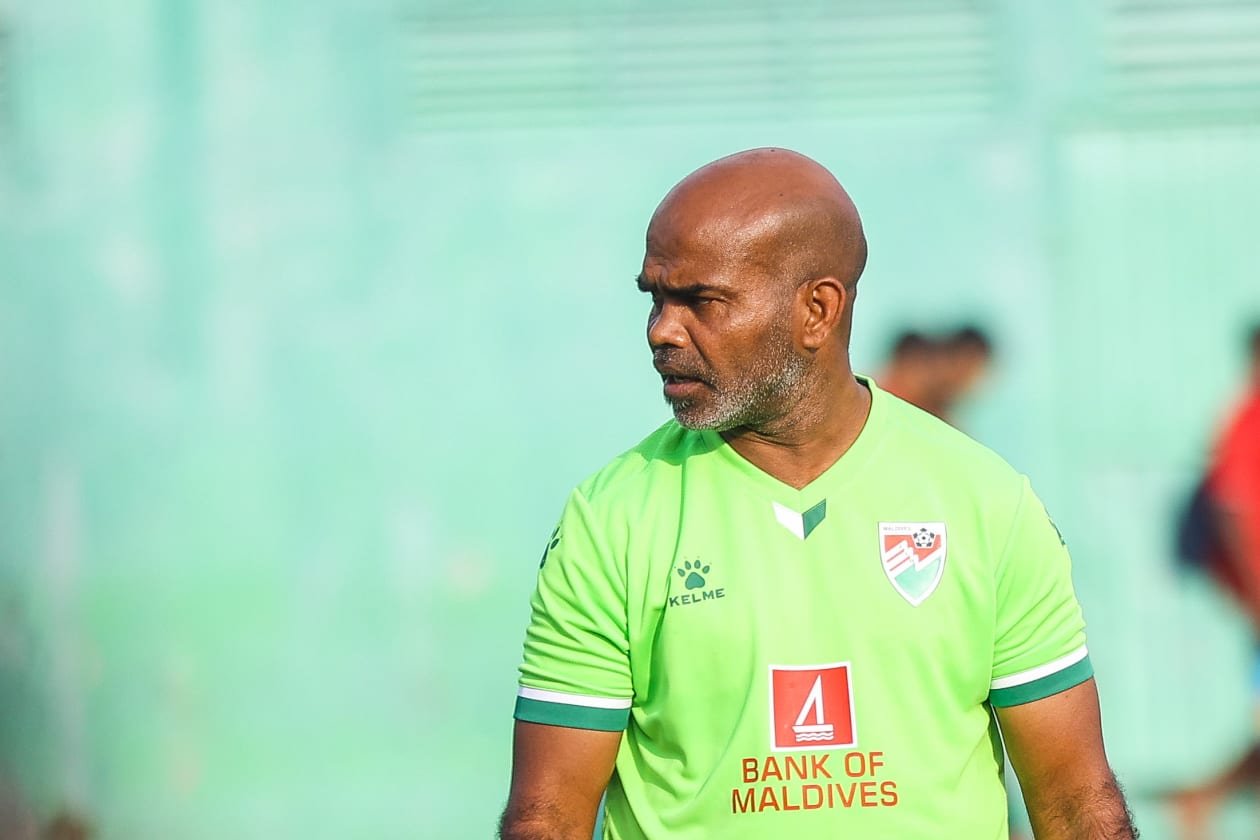
Goa, India: Head coach Sobah Mohamed (Soba) says he is proud of the fighting spirit shown by the Maldives women's national football team despite opening their SAFF Women’s Championship campaign with consecutive defeats against regional powerhouses India and Bangladesh.
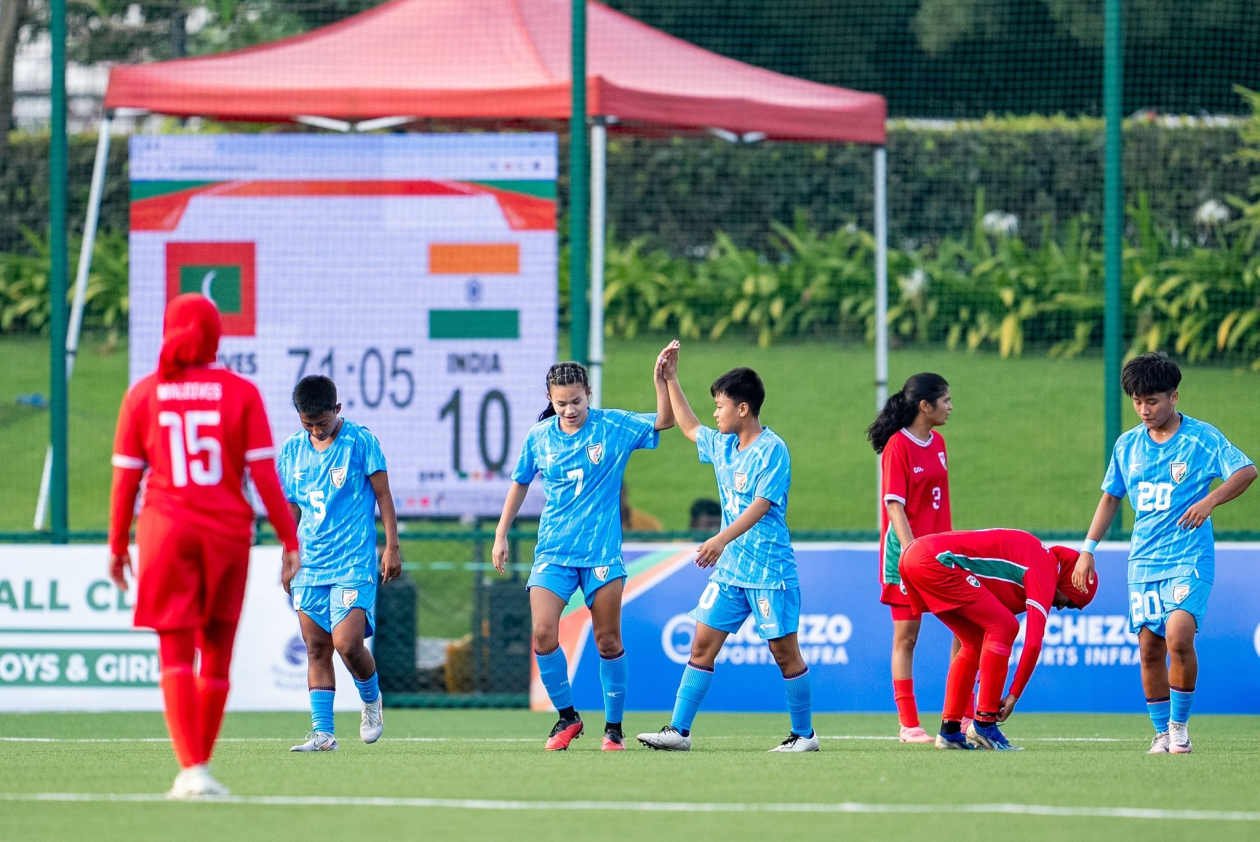
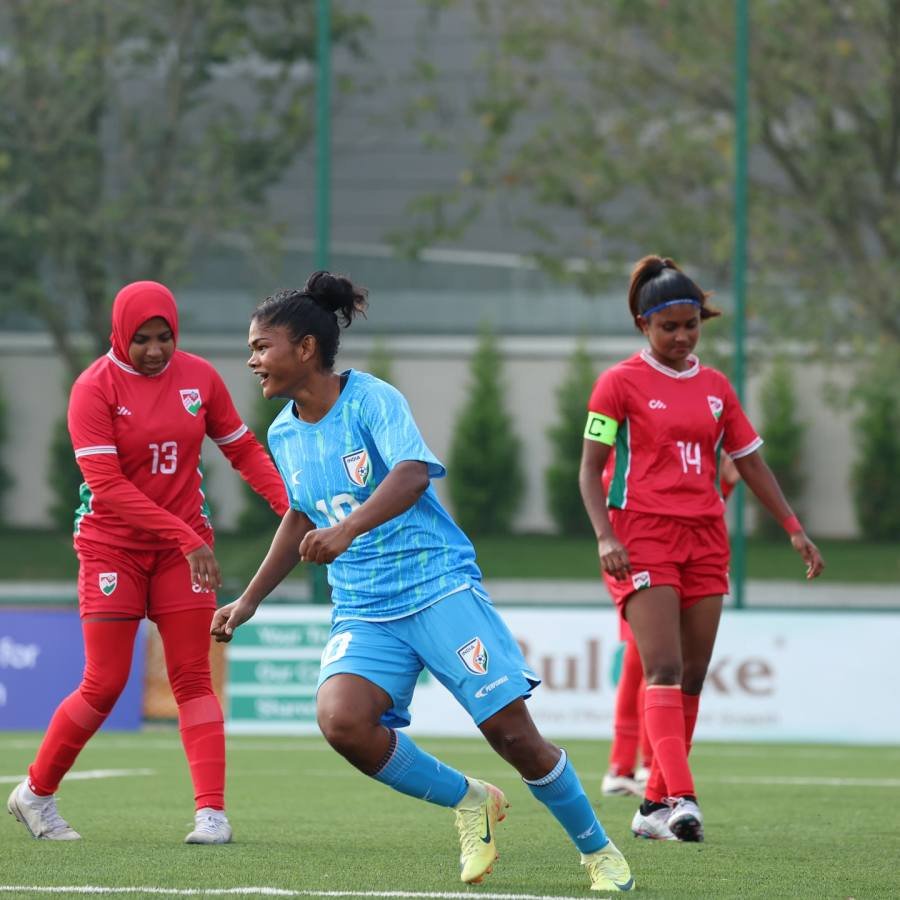
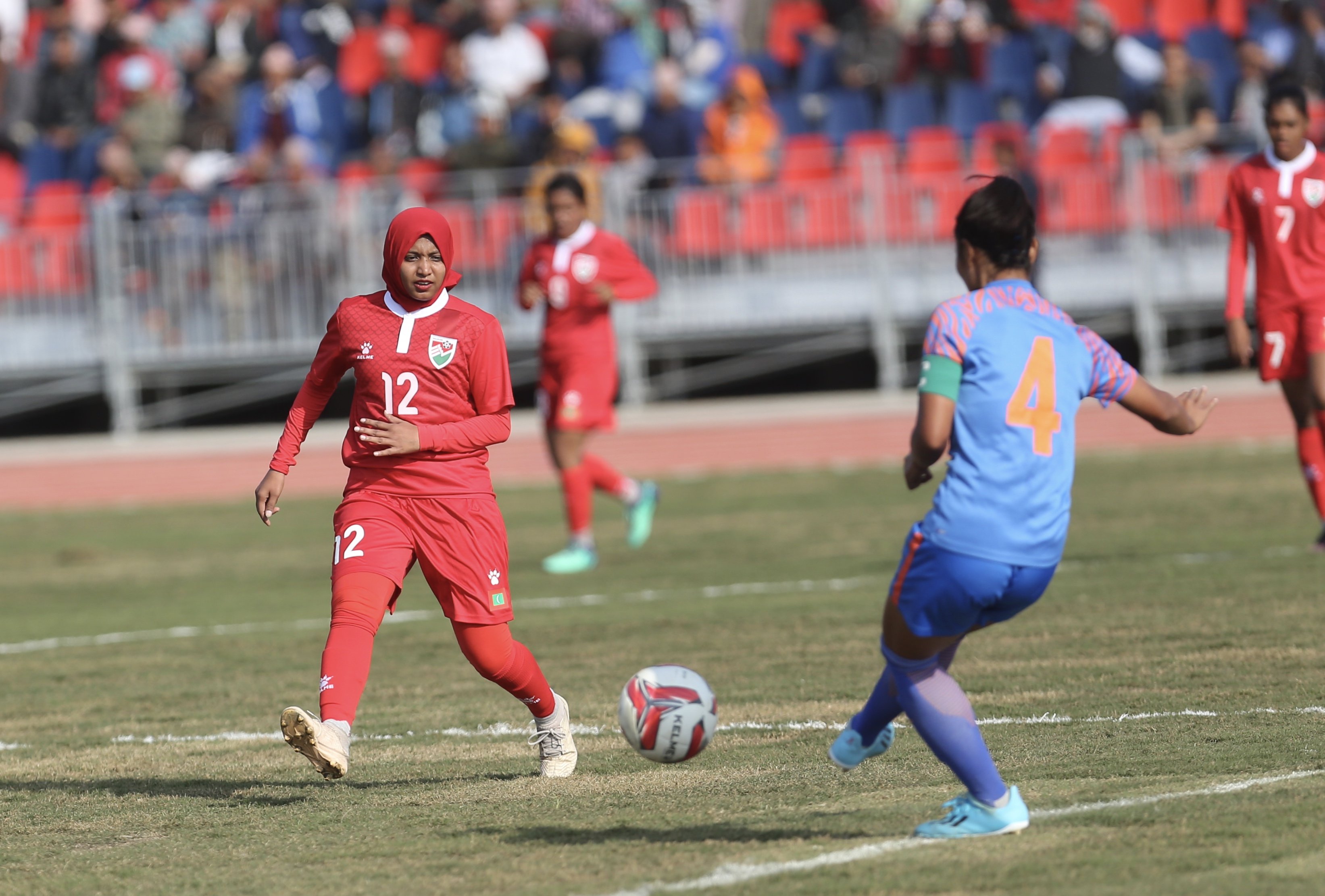
Maldives suffered an 11-0 defeat against five-time champions India women's national football team in their opening match before delivering a much-improved performance against defending champions Bangladesh women's national football team, eventually losing 4-2 after fighting back from two goals down to level the match.
Speaking during the post-match press conference, Sobah highlighted the difficult circumstances surrounding the team’s preparations, while emphasizing that the performances reflected encouraging progress for Maldivian women’s football.
“If we could have come to India three days earlier and with our number one goalkeeper, we could have done something differently,” Sobah said. “But despite all this, I’m proud of the progress made in these two matches.”
Sobah, who is also the head coach of the Maldives U-17 national team, revealed that his appointment to the senior women’s side came suddenly following a Football Association of Maldives decision requesting his assistance ahead of the tournament.
“The team prepared for only 28 days,” he explained.
“Compared to India and Bangladesh, we are not professional. We don’t even have a professional league. Most of these girls come from futsal backgrounds, and usually when a tournament is hosted, we gather and participate.”
Despite the limitations, Sobah praised the players for their discipline, commitment, and resilience throughout both matches.
“I told them just give everything on the field because I didn’t want us to be humiliated. They did everything, and I’m very proud of the girls,” he said.
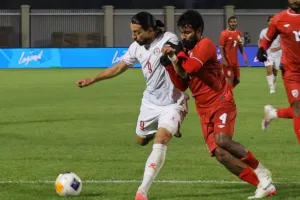
The coach admitted he was particularly impressed by the team’s effort levels during the 90 minutes against Bangladesh, where Maldives managed to recover from a two-goal deficit to draw level at 2-2 before eventually conceding two late goals.
“I’m surprised by the effort they put in for 90 minutes,” he noted.
Sobah stressed that long-term planning and development are essential if Maldives hopes to close the gap with South Asia’s leading nations. He pointed to countries such as India, Bangladesh, Nepal, and Bhutan as examples of federations investing consistently in women’s football development.
“Development for women and youth football needs time. This is a long-term process,” he said. “India and Bangladesh have been doing that for years. Even Nepal and Bhutan are developing very well, but we are behind.”

The Maldives coach also highlighted the lack of international exposure and competitive match experience available to his players.
“These teams have been training for years, camping abroad, and playing many friendly matches. Our girls played only two friendlies last year before coming here,” Sobah explained.
Travel complications before the opening match against India also affected preparations, according to the coach. Maldives arrived in India on May 24, but half the squad reportedly became stranded at Mumbai Airport, leaving the team with less than 24 hours in the tournament city before kickoff.
“You must understand how tired the girls were,” he said. “I’m not saying we would beat India, but maybe we could have reduced the goal margin.”
Sobah also revealed that Maldives competed without their first-choice goalkeeper, though he praised the replacement goalkeeper for her efforts and encouraged patience as the players continue learning through experience.
“They are learning from mistakes, and they need more time,” he stated.
The coach acknowledged the significant gap between Maldives and the region’s strongest women’s football nations, describing matches against India and Bangladesh as “a different story.”
“I have huge respect for Sri Lanka, Bangladesh, Nepal and Bhutan. Women’s football is improving a lot in this region,” he said. “India and Bangladesh are investing heavily in development, but sadly we don’t have anything like that at the moment.”
Sobah, who previously studied coaching in Spain and worked extensively in Maldivian club football, expressed hope that the Football Association of Maldives would prioritize long-term investment in women’s football moving forward.
“If I get a longer period with the team, I want to share my knowledge with the players,” he said. “We need more preparation, more friendly games, and more competitive matches because that’s how players improve.”
While the results have been difficult, Maldives’ spirited display against Bangladesh provided signs of progress and resilience as the team continues its rebuilding process under Sobah’s leadership.