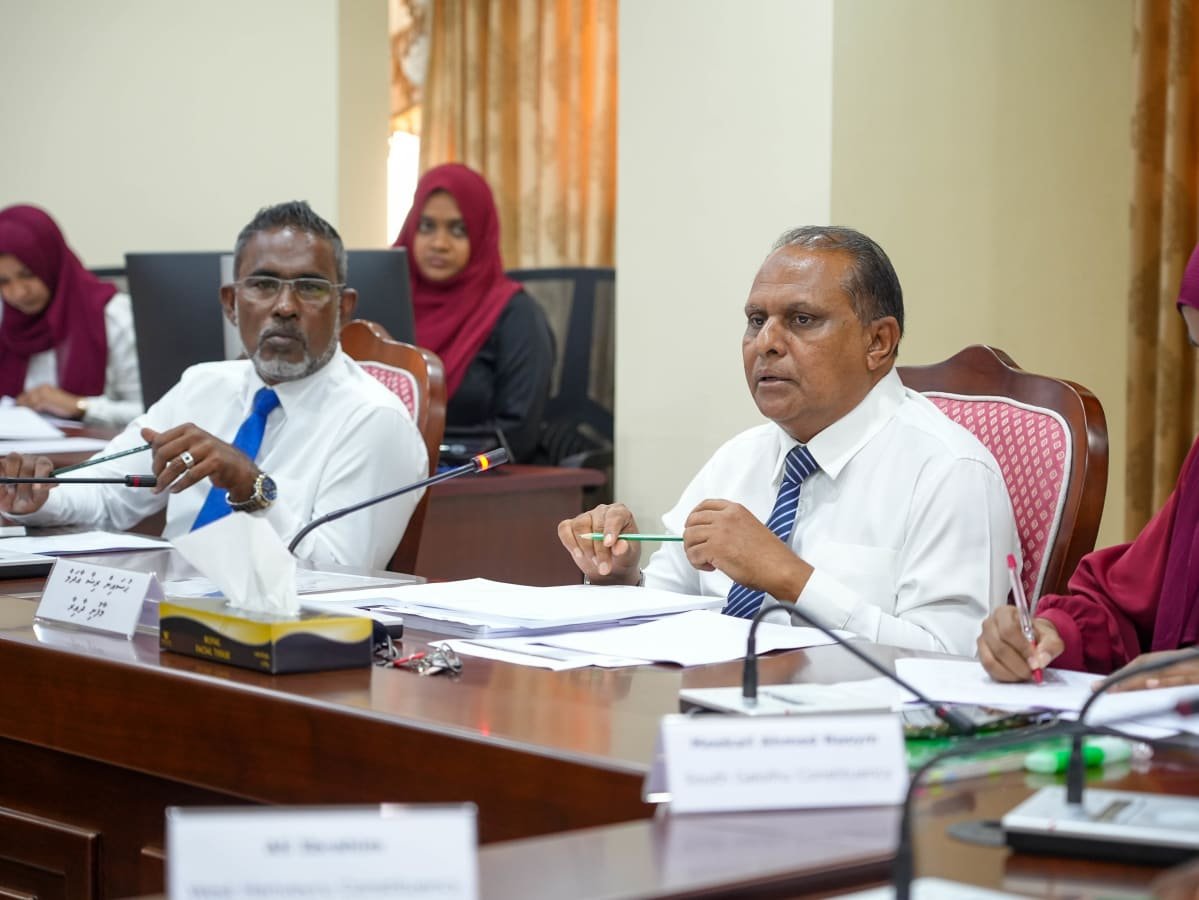
Journalists have been forcibly removed from a meeting of the parliament's committee on independent institutions to review the media control bill.
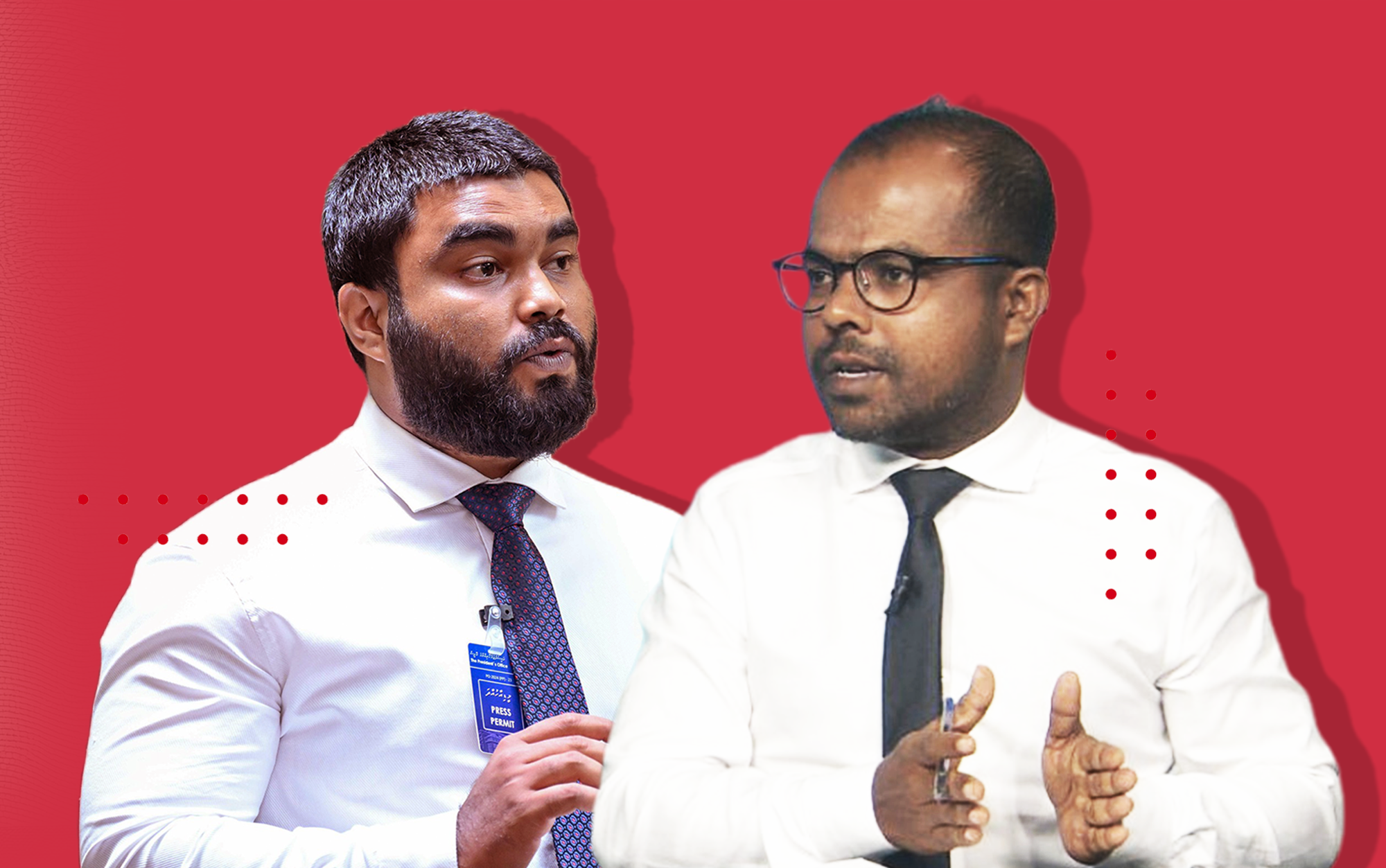
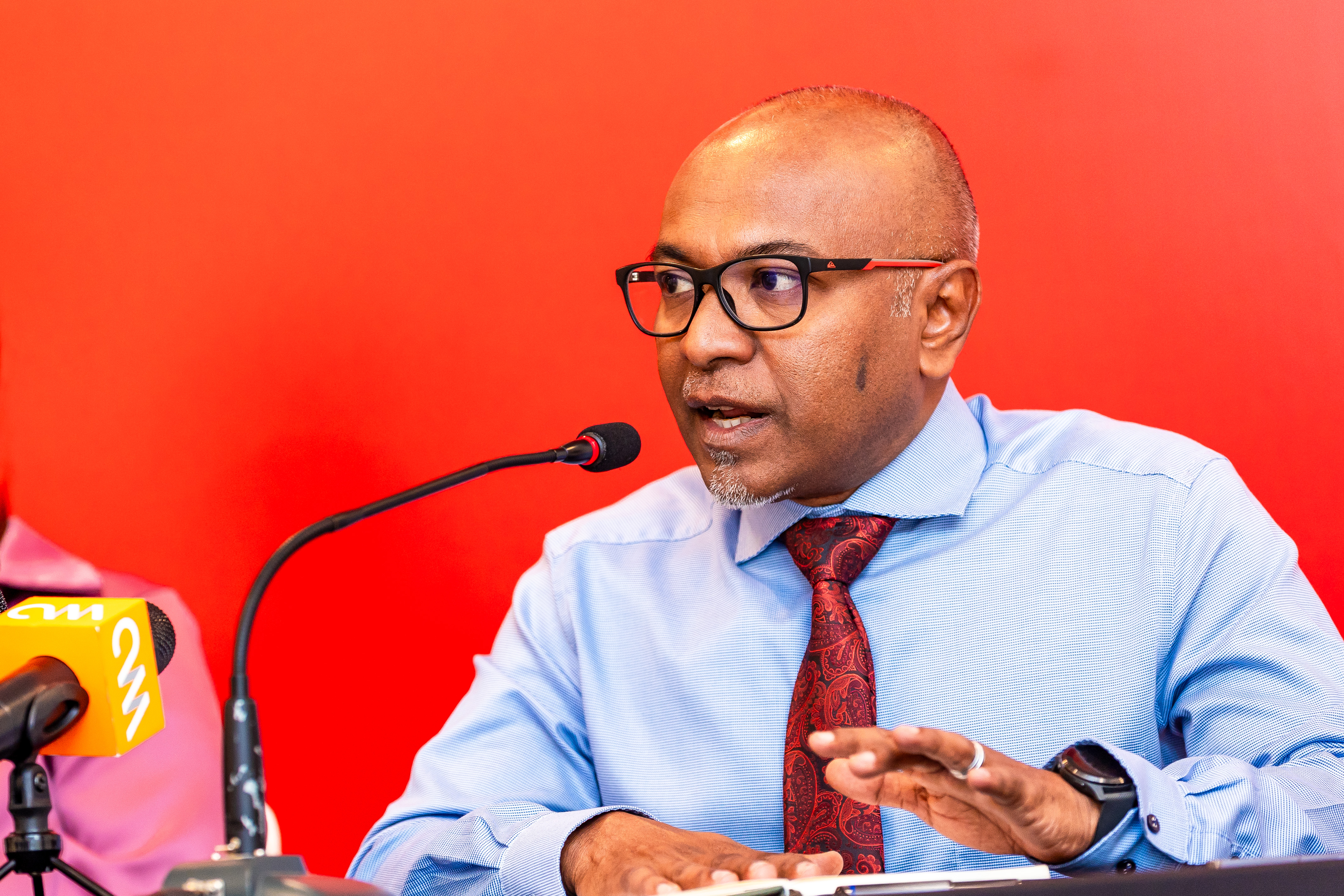
Kelaa MP Abdulla Shareef proposed to hold the meeting behind closed doors. Fuvahmulah South MP Ibrahim Hussain supported the motion.
The committee claimed that a closed-door meeting was necessary as personal information of individuals might be disclosed when discussing submitted opinions.
Tuesday's meeting was also held in secret. Journalists were kicked out yesterday, while they were manhandled and forcibly removed from the meeting today.
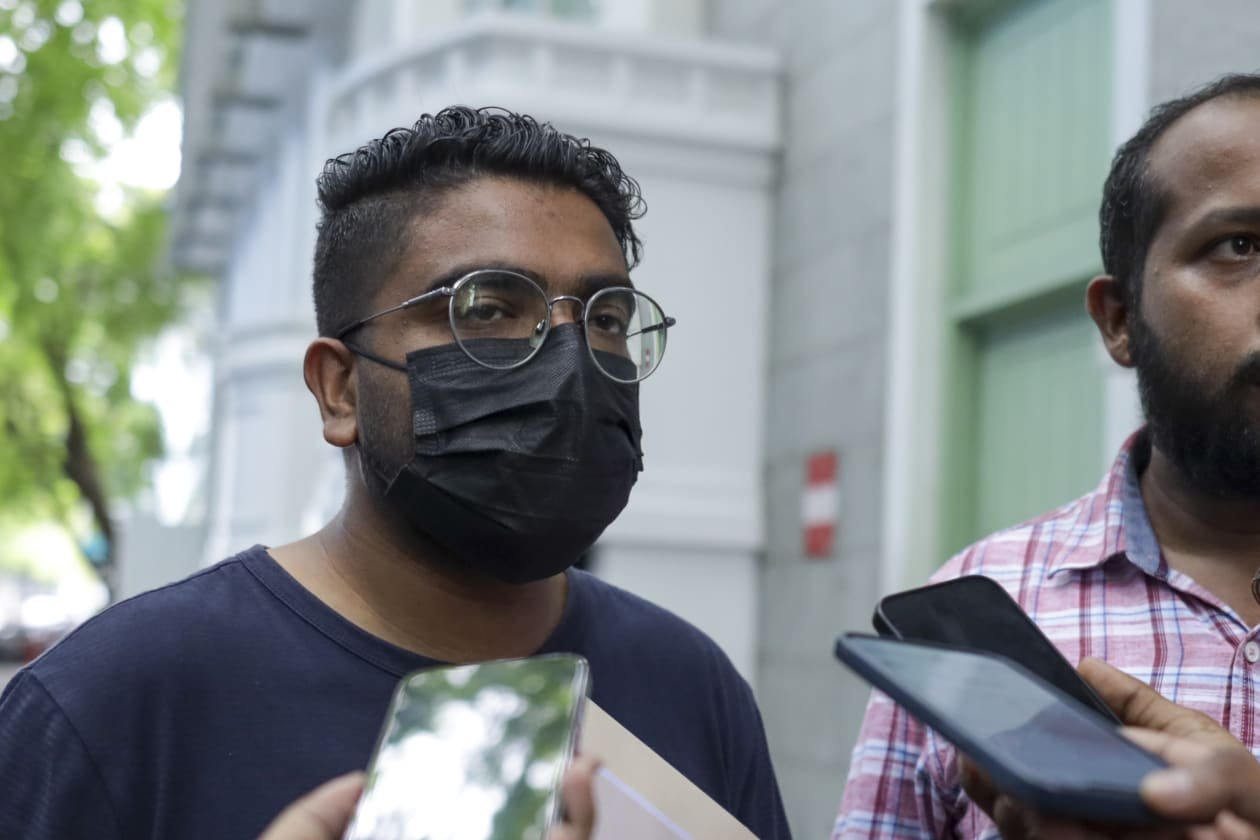
Journalists who were forced to leave the committee meeting staged a protest outside the parliament building yesterday.
They called to open the meeting and requested a meeting with the Sergeant at Arms of the People's Majlis.
According to the Rules of Procedure of the parliament, a parliamentary committee can be held behind closed doors in three circumstances;
- A meeting to discuss something that could endanger national security.
- A meeting to discuss information related to law enforcement, which is not appropriate for publicising.
- A meeting to discuss a matter which might victimise a person, cause harassment, or be judged as a perpetrator.
Journalists argued that the meeting to discuss the media control bill was being held in secret in violation of the rules.
They raised the question at the beginning of the committee meeting, but MPs did not respond.
Local and international organisations and the journalist community have demanded that the media control bill be withdrawn from the government-controlled parliament.
A social media campaign is ongoing against the bill, and a petition with signatures from 151 journalists and 41 news outlets was submitted to the President's Office and the People's Majlis.
On August 28, Attorney General (AG) Ahmed Usham said there was no reason to withdraw the bill.
The new Maldives Media and Broadcasting Commission will be established if the bill is approved by the government-controlled People's Majlis. The commission will be made up of seven members, three of whom will be appointed by the President.
The bill does not explain why a commission to regulate the media needs members appointed by the President. It further states that the Chairperson of the commission will also be appointed by the President.
The bill gives the new commission substantial powers. These include fines of up to MVR 100,000 for media outlets and temporary cancellation of registration before a case is investigated. The commission can also go to court to revoke a registration.
The commission will also be empowered to issue orders to block a news website or stop a broadcast while it investigates a case.