The Housing Development Corporation (HDC) ranks among the richest and most profitable state-owned companies. Its most valuable assets are vast tracts of land, reclaimed at the cost of millions of dollars. HDC owns all the land in Hulhumale'.
As the company bearing the greatest responsibility in a country where land and housing are scarce, HDC's operations directly impact the lives of countless people. For this reason, its actions must embody integrity and transparency, as they affect the well-being of thousands.
However, the rumours surrounding HDC today paint a different picture. Allegations aimed at the company include theft of land, flats, employment opportunities, goods and services, and funds from agreements. All of these point to systematic corruption enriching select individuals. The company appears mired in fraudulent practices.
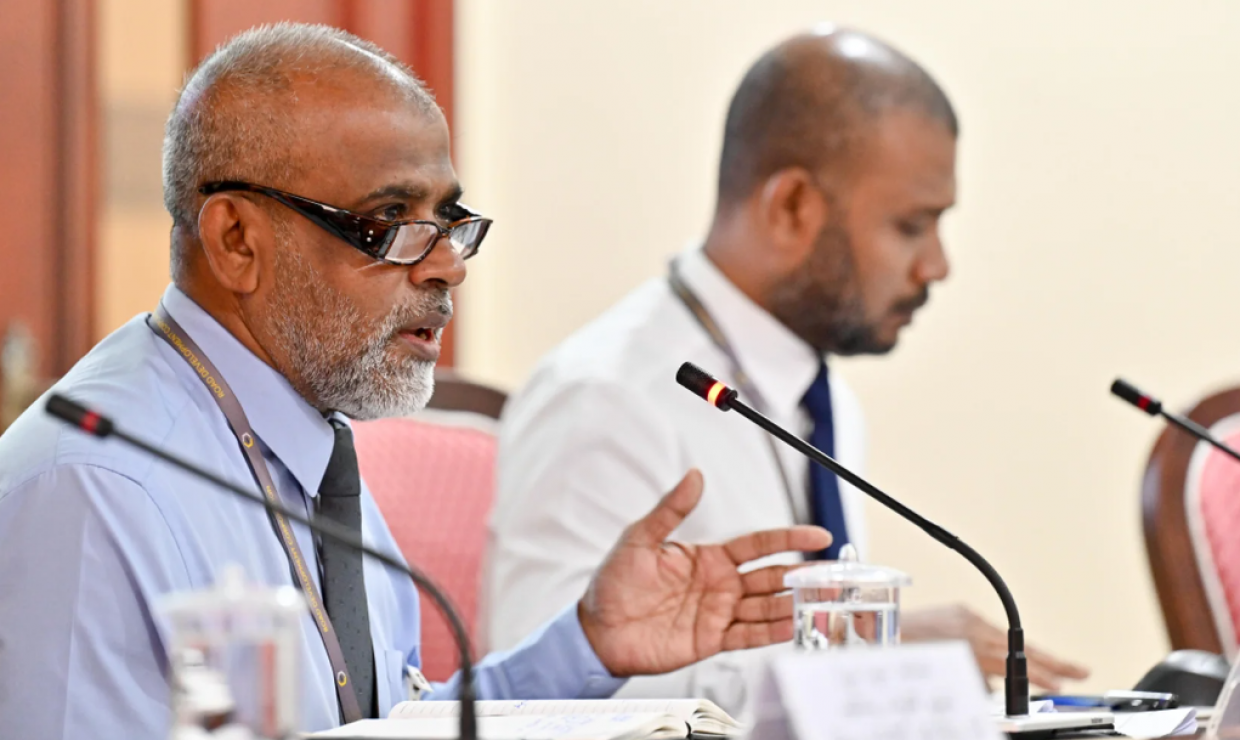
Fazul on the job: all corruption funnelled into their own pockets through an “inner circle”
When these issues unraveled, HDC was under the leadership of Managing Director Ibrahim Fazul Rasheed, who resigned recently after the forged land registry scandal came to light. Fazul had long faced allegations but remained in office until this breaking scandal forced his hand.
A letter from former HDC Chairman Ahmed Zuhoor to President Dr. Mohamed Muizzu sent last July accuses Fazul of numerous crimes. The letter alleges that Fazul failed to declare conflicts of interest to the board, sold land to his wife on preferential terms, collected bribes from unsold Vinares flats, accepted money to defer rents for businessmen, and inflated project costs for elevators to the Hiyaa flats.
Fazul is suspected of orchestrating these schemes with a select group of employees, an "inner circle" that undermined board oversight. He allegedly centralised control to the extent that the company's board had little authority over his actions.
President Dr Muizzu knew about HDC in the same way President Yameen knew about MMPRC
The allegations against Fazul and HDC were not new. Reports of corruption had been circulating widely even before Zuhoor’s letter. News outlets, including Adhadhu, had published stories highlighting these issues. Yet, state agencies and the government seemed oblivious until the recent social media posts, leaked documents, and public outcry brought everything into the spotlight.
This is reminiscent of how former President Abdulla Yameen came to know about the MMPRC scandal, the largest corruption case in the country’s history. In both cases, the government and relevant agencies appeared to react only after the damage was done.
In Fazul’s case, President Muizzu reportedly only became aware of the issues after the scandals were widely exposed, despite Zuhoor’s letter being delivered to the President’s Office and sent directly to the President’s WhatsApp number. Calls for the Anti-Corruption Commission (ACC) to investigate were largely ignored until the situation reached a breaking point.
If the systemic issues in HDC and beyond are to be addressed, decisive action is essential. Corruption must be identified and rooted out as it occurs, with relevant authorities staying vigilant and proactive. Delayed responses and institutional inaction only deepen public disillusionment.
Although police and the ACC are now investigating Fazul’s actions, the public remains dissatisfied with the lack of accountability. For genuine reform, the government must ensure that those responsible for wrongdoing face the full force of the law.
The new management at HDC has a critical role to play in rebuilding public trust. Restoring confidence requires transparency, integrity, and a clear commitment to eradicating corruption. As the custodian of one of the state’s most vital resources, HDC must prioritise the public good above all else.