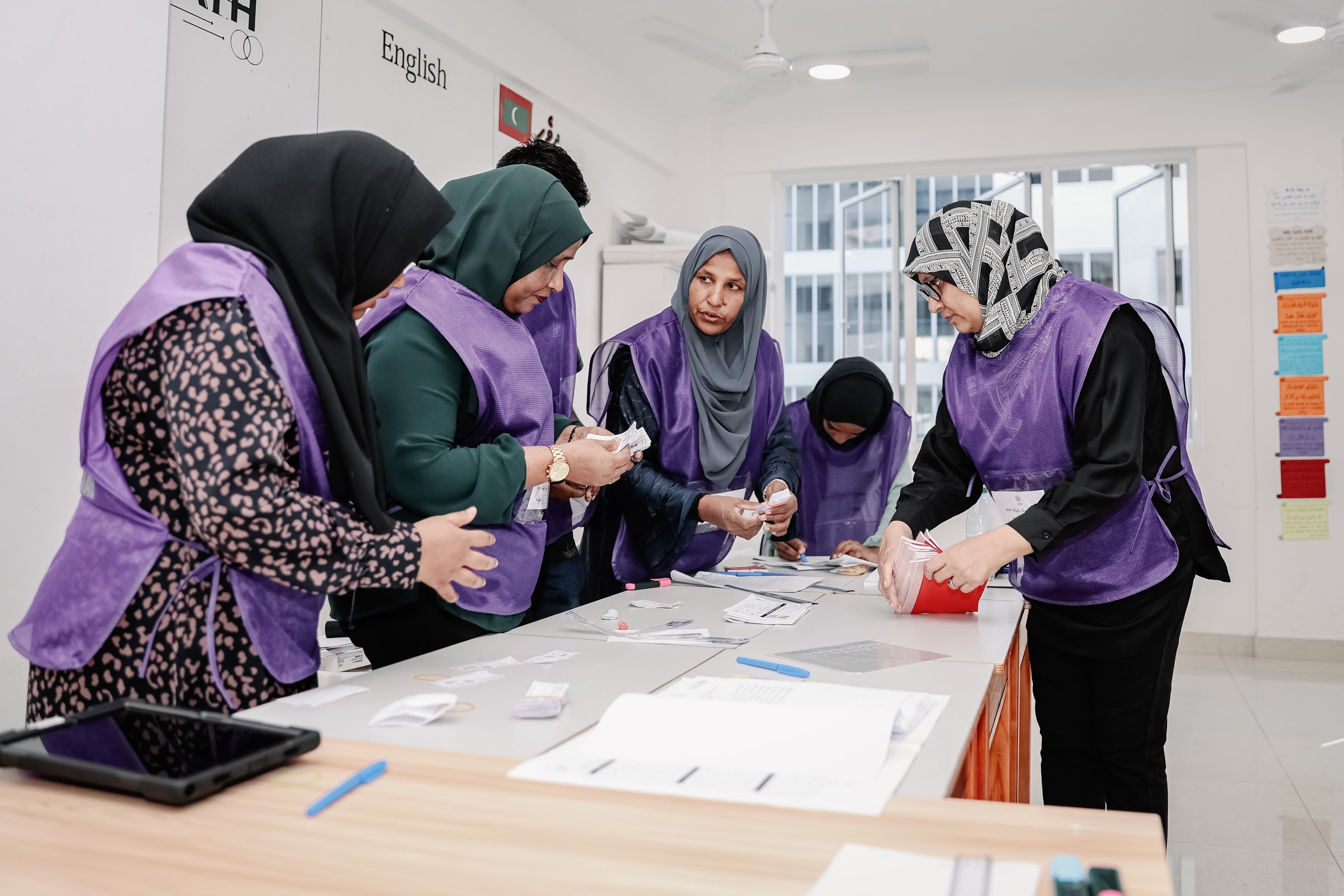
The Human Rights Commission of Maldives (HRCM) on Monday published findings from its observation of the recently concluded parliamentary elections.
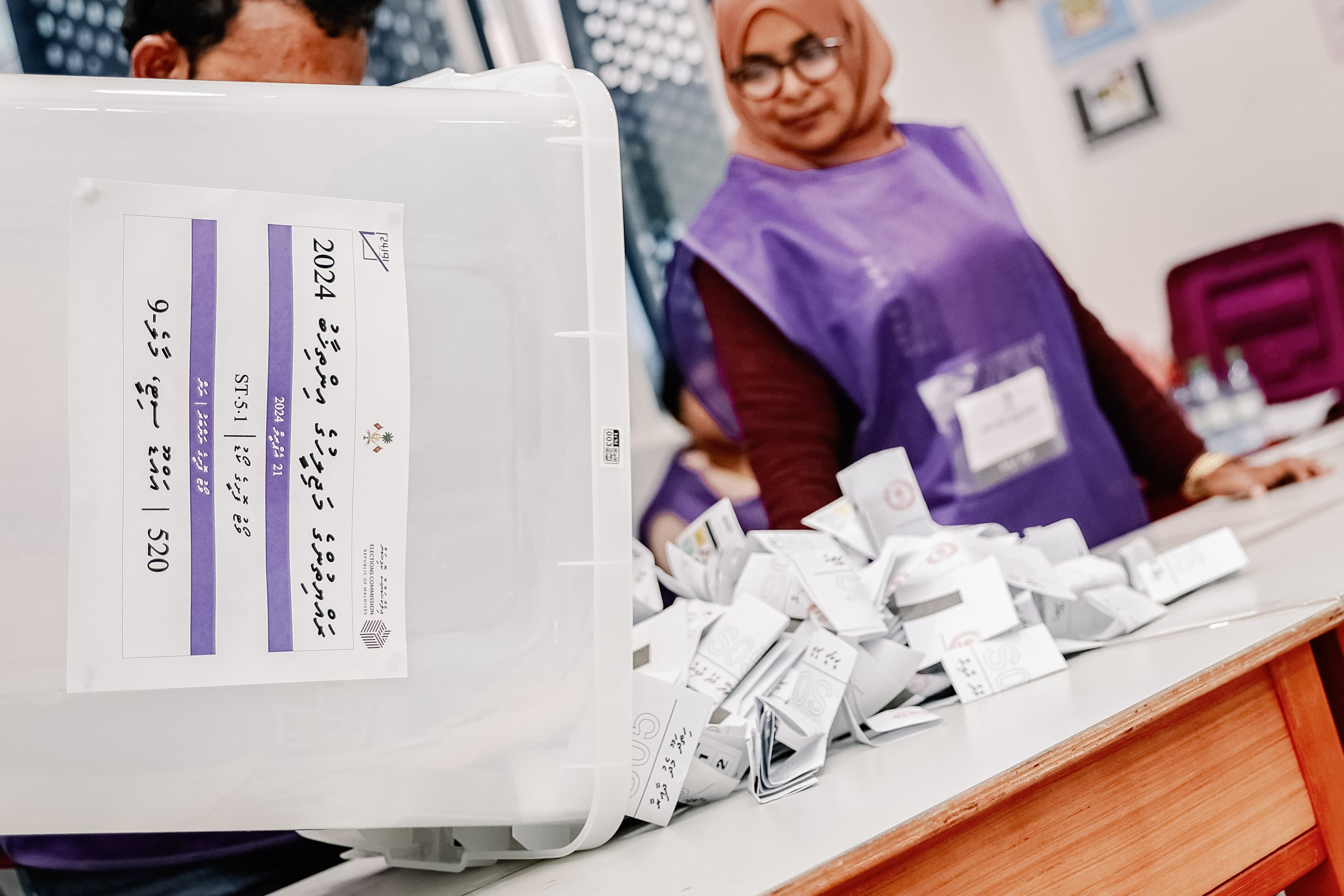
The commission said in a press statement that 88 observers were deployed to 35 islands in 18 atolls for the April 21 elections.
HRCM’s observations from day before the election:
- Campaign posters were vandalised in some areas
- No disturbances occurred during activities held to conclude the campaign on the final day of campaigning
- Campaigning ended in all areas at the cut-off time of 6 pm. However, messages and campaign posts continued to be sent through social media and news outlets.
HRCM’s observations from polling day:
- 77 percent of polling stations opened on time at 8:00 am. The start of voting was delayed mainly due to the failure of officials to complete preparations on time.
- The number of ballot papers was not checked before 7:30 am at 45 percent of polling stations. Out of the observed boxes, voting started the latest at 8:30 am.
- The “list of eligible voters” was not put up outside three polling stations. As the lists were kept on a table inside the polling stations, it is likely that all voters might not have seen the list.
- Voters were forced to stand out in the sun in nine percent of polling station areas and there were no arrangements for cover from rain at 12 percent of polling station areas.
- Voters with physical disabilities would have been unable to enter 37 percent of polling stations on their own without assistance. The reasons included small spaces, narrow entrances and obstacles in front of the polling station.
- Campaign materials were in front of the gate/door of 23 areas.
- All arrangements for voting were not fully assured at 15 percent of polling stations.
- As ballot boxes were kept on tall tables at 20 polling stations, persons with disabilities found it difficult to cast their ballots.
- One polling station allowed one person who showed a “disability card” to vote but other polling stations did not allow it. The card is not an official document that could be used for voting.
- Most polling stations did not receive the four extra ballot papers required by law for polling stations with fewer than 100 people registered and eight extra ballot papers for polling stations with more than 100 people registered.
- Arrangements were not made at six polling stations to verify the identities of persons wearing the face veil. Therefore, their faces were checked in front of other voters.
- Influence was exerted over the votes of persons with physical disabilities during assisted voting.
- While photos were taken within a distance of 10 feet from the voting booth at 18 percent of polling stations, some officials did not stop it. Observers, monitors and candidate representatives also used phones inside polling stations.
- The actions of observers, monitors and candidate representatives were in breach of ethical standards at 38 percent of polling stations.
- Various politicians encouraged voting for a specific candidate or party during interviews given to the media after voting.
- Actions that could have compromised the secrecy of the ballot occurred at eight polling stations.
- At one polling station, some people were allowed to vote after the queue closed board was put up.
The Elections Commission’s (EC) preparations and arrangements for the election were generally good and the overall conduct of the polls was smooth with very few issues, HRCM said.
A total of 602 ballot boxes were placed for the elections, including 241 boxes in the Male’ area and 34 boxes in resorts.
MPs were elected for 93 constituencies. However, only three out of 43 female candidates won the elections.
The new MPs-elect are due to be sworn in on May 28.