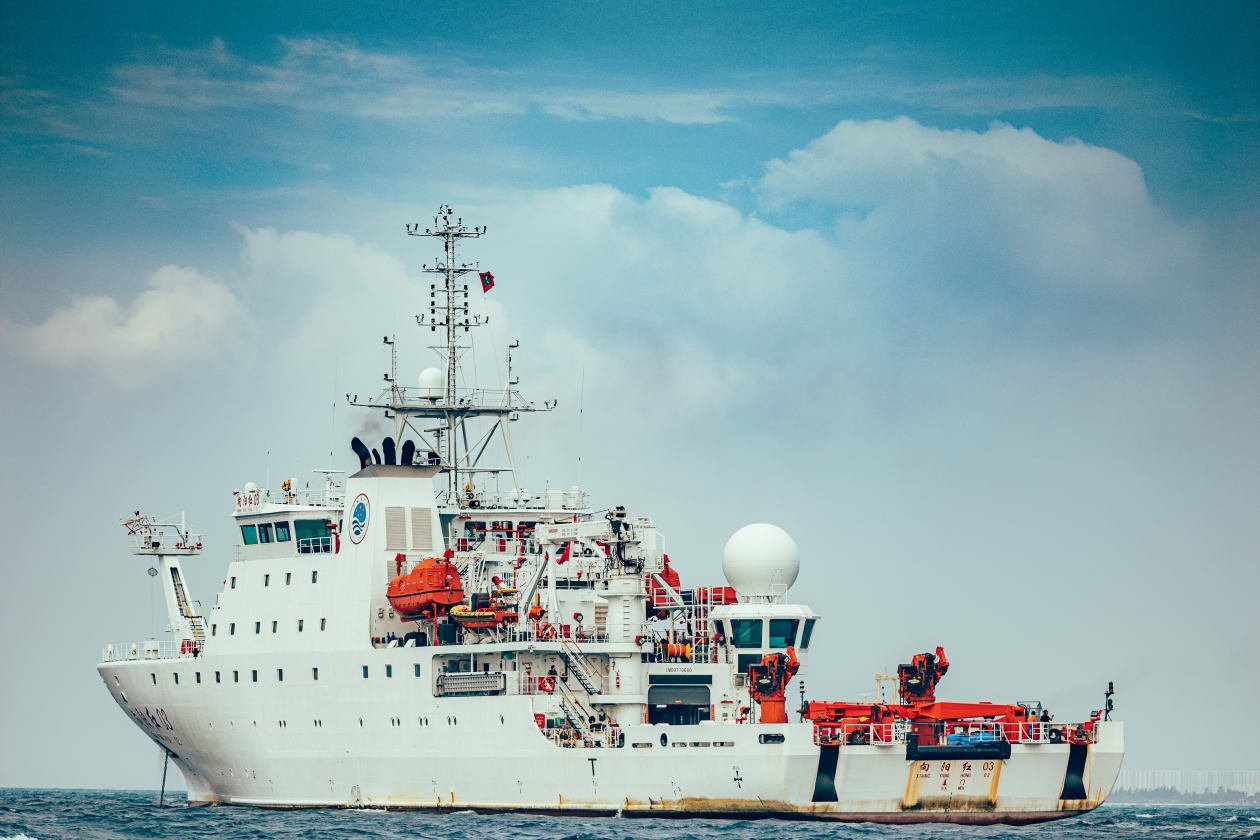
Chinese marine research vessel Xiang Yang Hong 03 has been revealed to have entered the Maldives' Exclusive Economic Zone (EEZ) over the past month.
The Chinese ship arrived near the Maldives on January 29. It had first been scheduled to dock in Male' on that date. However, the ship docked in Male' on February 22 after spending a month near the boundary of the Maldives EEZ.
Following media reports, the Foreign Ministry previously confirmed the vessel's arrival in the Maldives. In a statement released at the time, the ministry said the Chinese government vessel was due to visit the Maldives for "rotation of personnel and replenishment." It is expected to have docked at Thilafushi for this purpose.
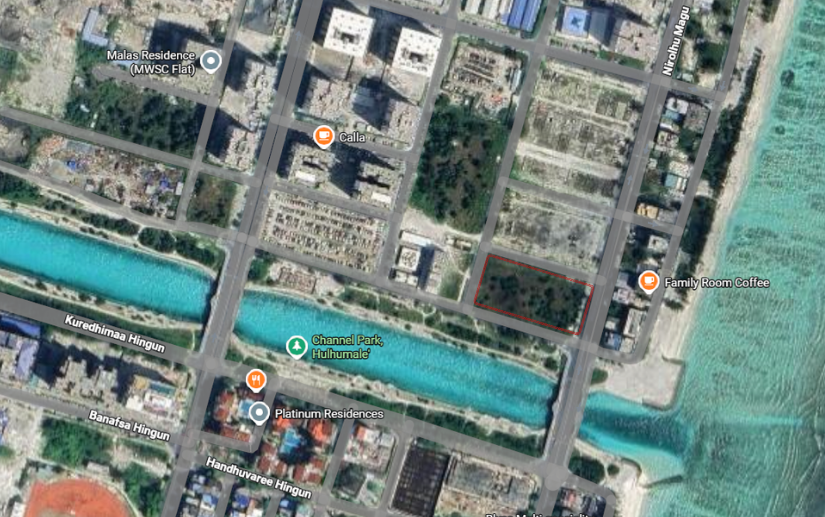
After docking in Thilafushi on February 23, the vessel returned to the EEZ boundary. Despite departing from the Male' harbor, commonly used tracking sites last showed the vessel's signal near Hulhumale' on February 26.
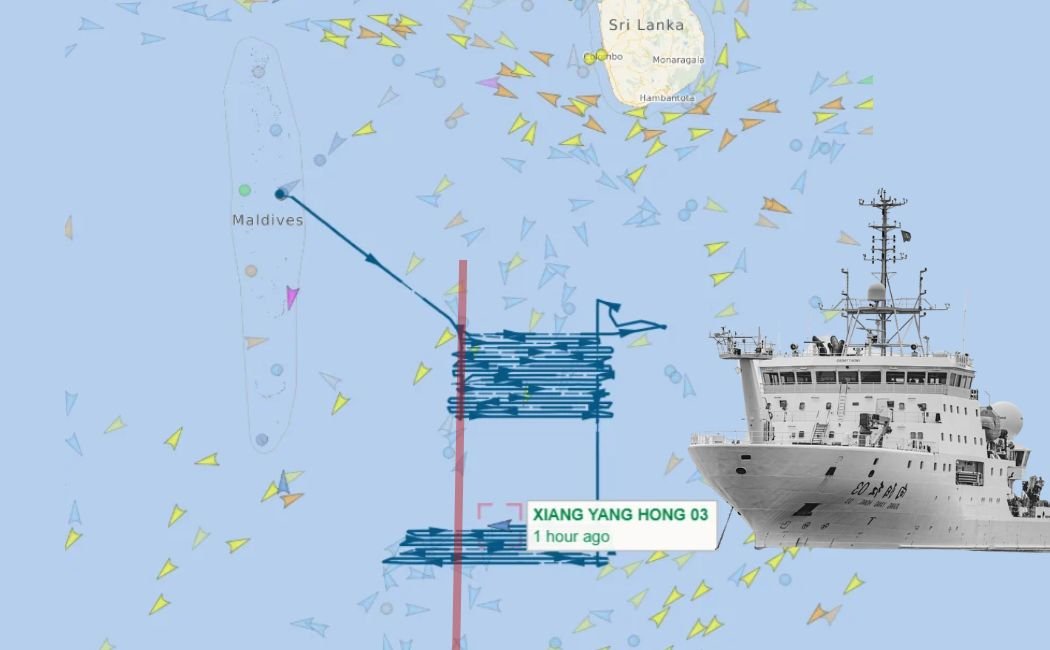
Current location of Chinese research vessel. -- Photo: Vessel Finder
The vessel is currently at the eastern boundary of the Maldives EEZ, Adhadhu found using satellite AIS tracking.
Information gathered by Adhadhu showed that the Chinese vessel sailed inside the Maldives EEZ on multiple occasions over the past month. The ship entered about 100 miles southwest of Addu. Its present direction is towards the Maldives as well.
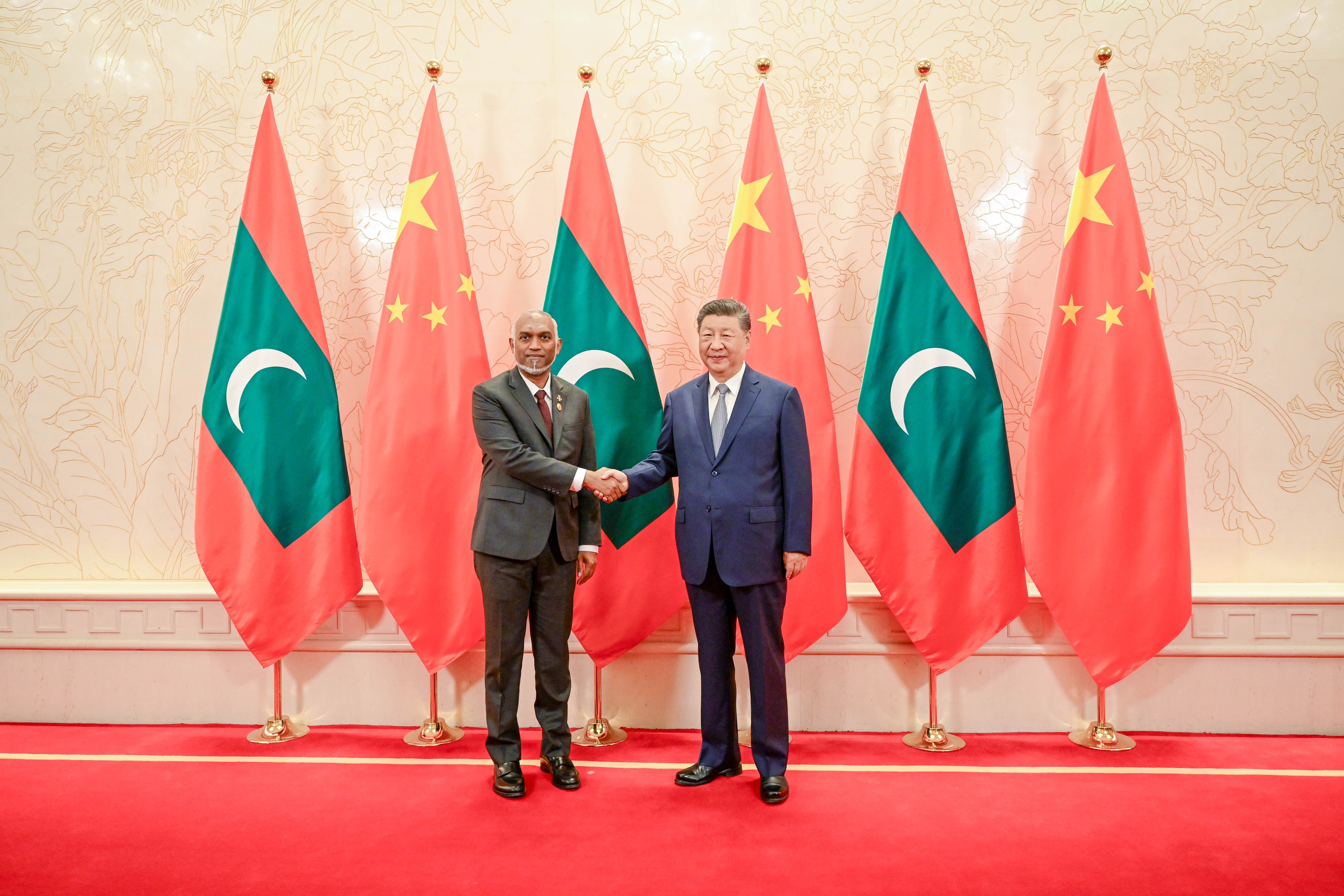
The most modern research vessel in the Chinese fleet at present began its journey to the Maldives on January 14, 2024, 24 hours after President Dr. Mohamed Muizzu concluded his state visit to China.
During the President's trip, a total of 20 agreements were signed with China. On March 4, the Maldives also signed a defense agreement with China. But the government has not disclosed details about this agreement.
Details of the vessel
The vessel, which is about 100 meters long, was added to the fleet of China's State Oceanic Administration (SOA) in 2016. This is the only 4,500-ton vessel currently in China.
Since 2019, China has also been using the vessel to conduct "distant water" and "deep sea" surveys at China's Pilot Ocean Laboratory.
The vessel can also be used for studies on salinity, microbial genetic studies, underwater mineral exploration and underwater life and environmental studies.
The vessel has data buoys that can measure ocean currents, waves and important environmental information. These buoys will provide real-time satellite information to the Chinese government.