Maldivians achieve 12 years of schooling but four years is wasted due to the poor quality of education, a World Bank study to assess human capital in the Maldives has shown.
The Human Capital Index (HDI) or the Human Capital Review report prepared by the World Bank estimates how much the productivity of the next generation is affected as a result of health, education, skills and gains in work experience.
The index is used to determine how much income countries lose because of low human capital and how much faster they could turn losses into gains with urgent measures.
The report released on Tuesday marked the first time that the World Bank calculated the human capital of the Maldives at a national and subnational level. According to the organisation’s research, the first national HCI score of the Maldives is 0.596.
The score is higher than neighbouring countries in the region and other small island nations.
However, the score indicates that a child born in the Maldives today could expect to be only 60 percent as productive on average as he or she could be with complete education and health. In other words, the Maldives is losing 40 percent of future productivity.
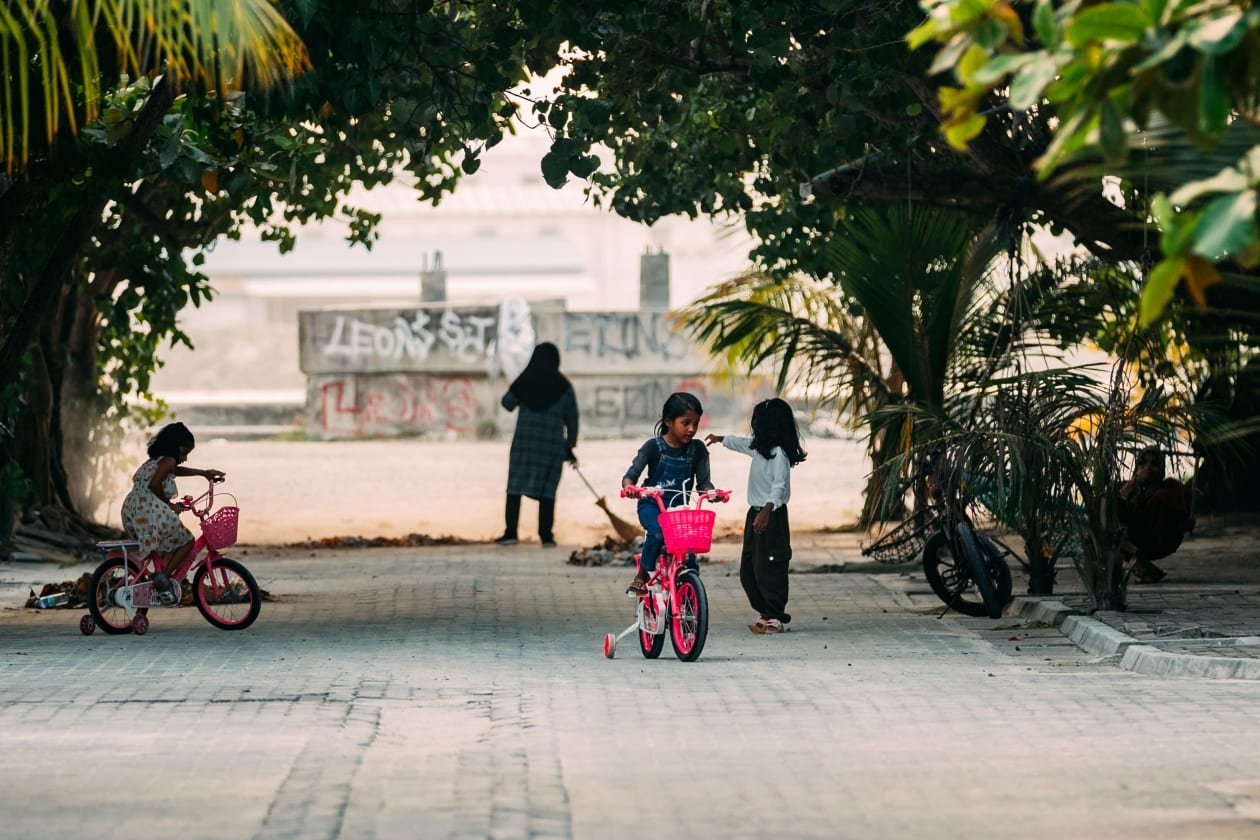
Children in Vilimale'. -- Photo: Mirash Nashim/ Adhadhu
The World Bank report noted three main observations about the Maldives HCI score.
The first is positive results in health. The Maldives has achieved a 95 percent probability of an adult surviving to age 60 and 99 percent of newborn children were expected to survive to five years of age. “The Maldives’ relatively high HCI score is driven largely by impressive health outcomes,” the report noted.
Secondly, the report noted challenges in improving the quality of education in order to fulfil the country’s human capital potential. Despite a child born in the Maldives achieving more years of schooling than counterparts in South Asian countries and other small island nations, four years is lost due to the low quality of education.
When the Maldives HCI is adjusted for human capital utilization, the score drops significantly with loss of potential national growth due to untapped human capital wealth.
With current levels of education and health, Maldivian children born today were predicted to be only 37 percent as productive in adulthood as they otherwise could have been and the Maldives loses almost 23 percentage points of potential productivity when young people reach the labor market.