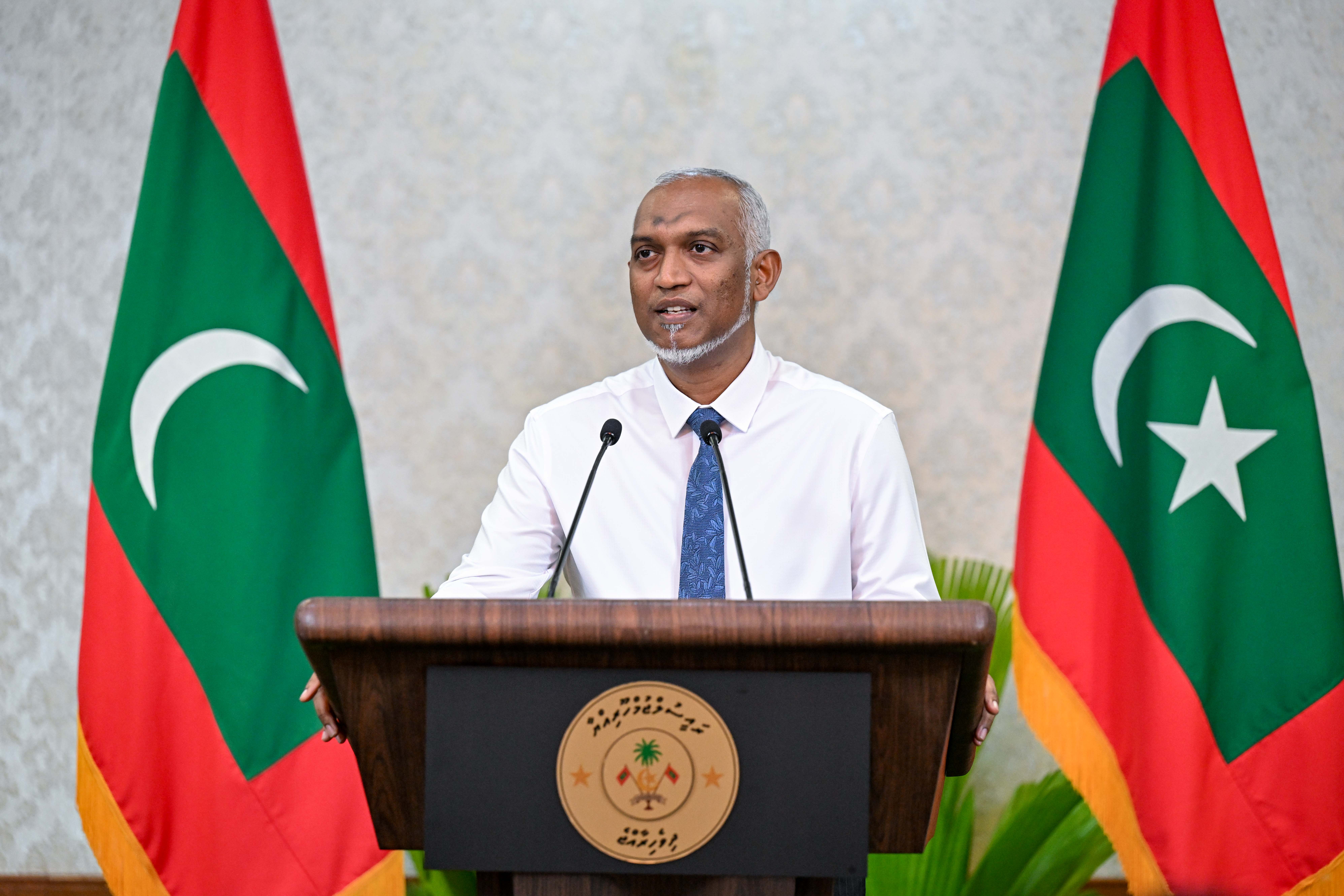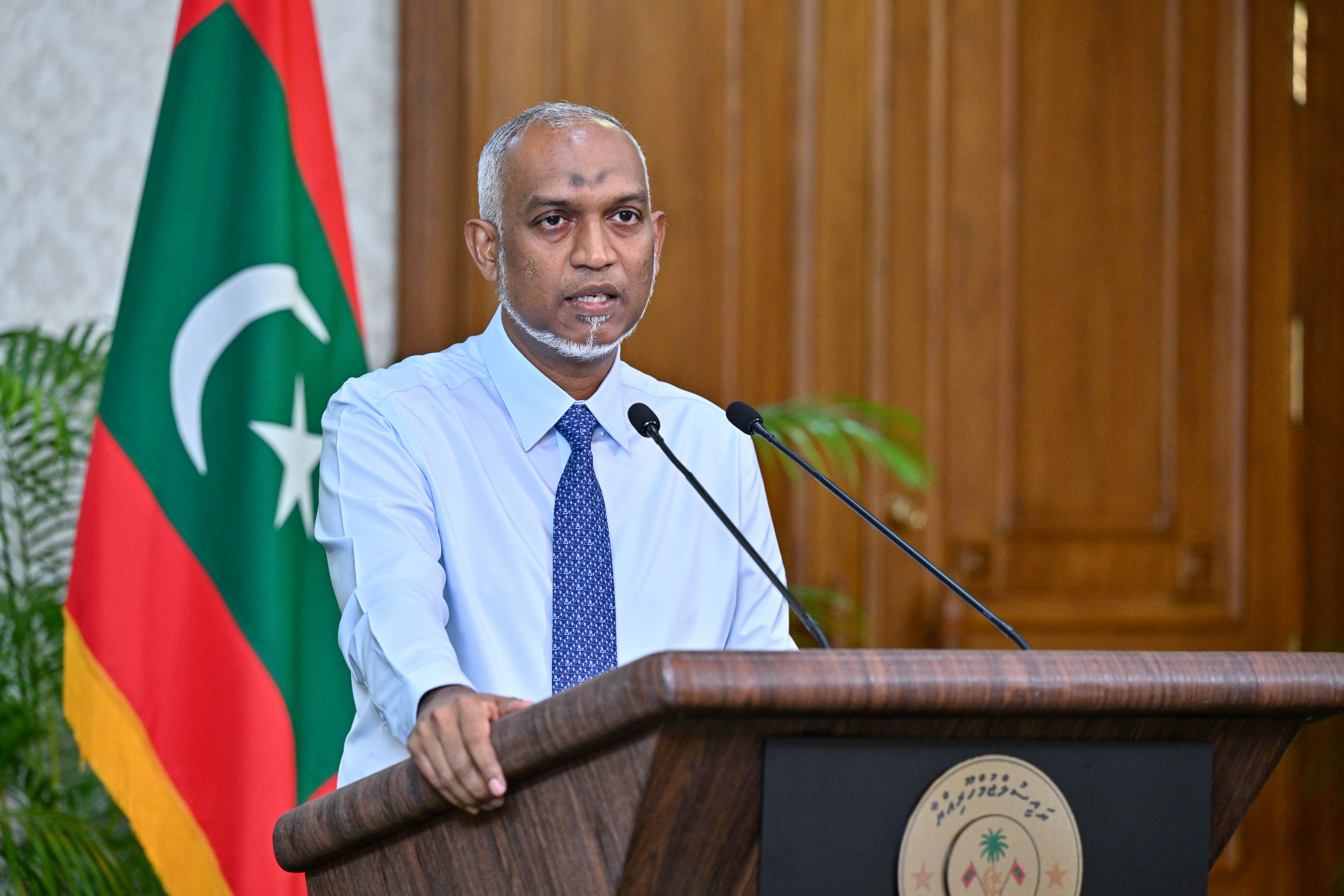
The government does not plan to shift Aasandha to a co-payment model and charge the public despite the rising cost and unsustainability of the health insurance scheme, President’s Office Undersecretary for Policy Mohamed Firuzul Abdulla Khaleel said on Thursday.
The assurance came after Aasandha Managing Director Aminath Zeeniya spoke in favor of a co-payment model. The change was necessary for the sustainability of the scheme, she said at Parliament’s state-owned enterprises (SOE) committee on Tuesday.
Asked whether the government plans to make changes to Aasandha during a press conference at the President’s Office, Firuzul said the government’s policy was to strengthen the scheme to fix problems.
Despite the high expenditure, no citizen was offered complete assistance under the current scheme when faced with a medical emergency, Firuzul said, which he attributed to problems with Aasandha and the government health system.
“A lot of the time a percentage of people have to go to private hospitals. All of those times we have to spend large amounts out of our own pockets. The President’s and the new government’s main view is that while such a high expenditure is being made on the one hand, on the other hand, it is not shaped to provide much benefit to the public,” he said.
One of the government’s policies related to problems facing Aasandha is to expand the scheme to cover more treatments required by the public. The other policy is to increase facilities for the public health system to resolve problems concerning delays and unavailability of treatments from government hospitals.
Offering an example of one such effort, Firuzul noted that thalassemia patients were required to visit a private hospital to perform DNA tests and T2* tests in the Maldives. But efforts are now underway to provide the services through the government system after bone marrow transplants for thalassemia patients were covered by Aasandha, he said.
“At the moment both these services [DNA tests and T2* tests] are available through the private sector. However, one thing that can be achieved in the near term, included in this decision and budgeted, is establishing these two services as well in the government system,” Firuzul said.
Despite Firuzul saying that Aasandha costs could be lowered by expanding coverage and reducing waste, Zeeniya’s remarks at the committee made it clear that the highest expenditure was on medicine. The Aasandha scheme cannot be maintained without a co-payment model and a holistic solution for the medicine supply issue, she said.