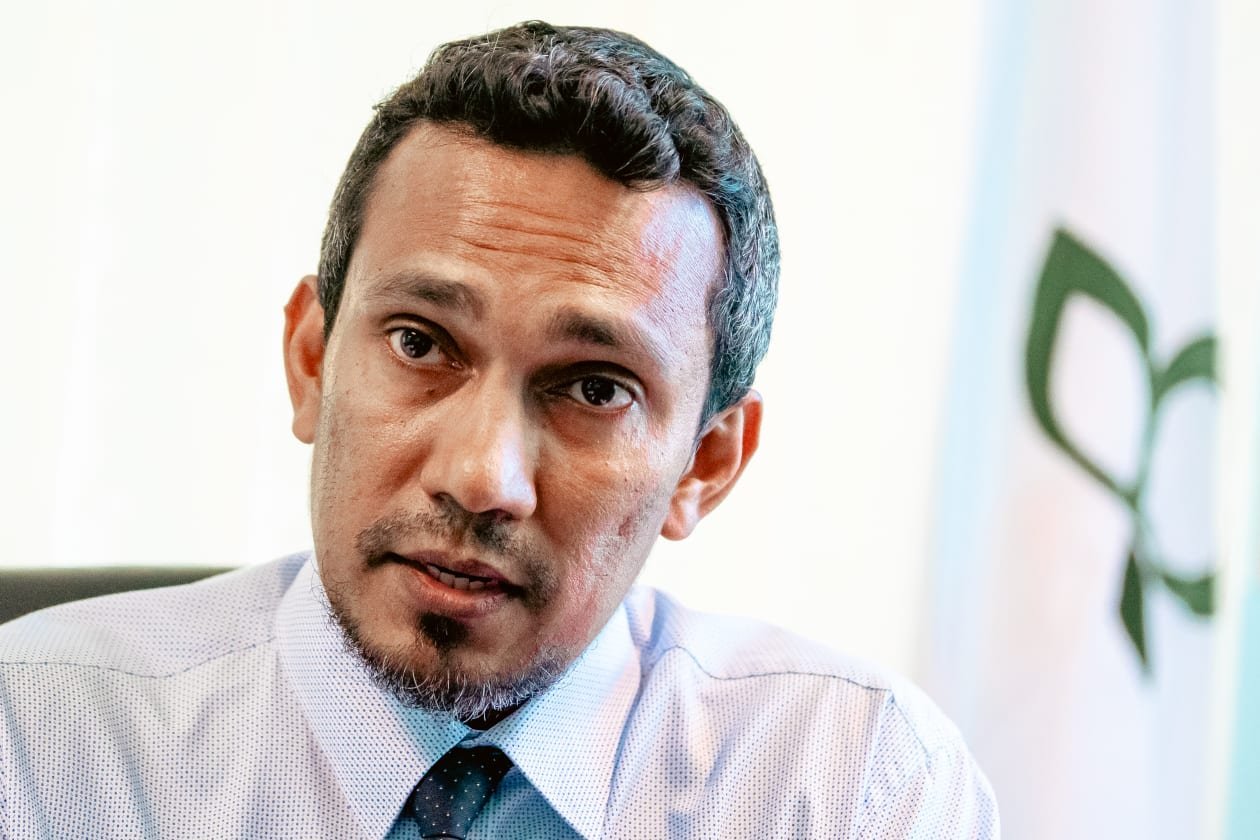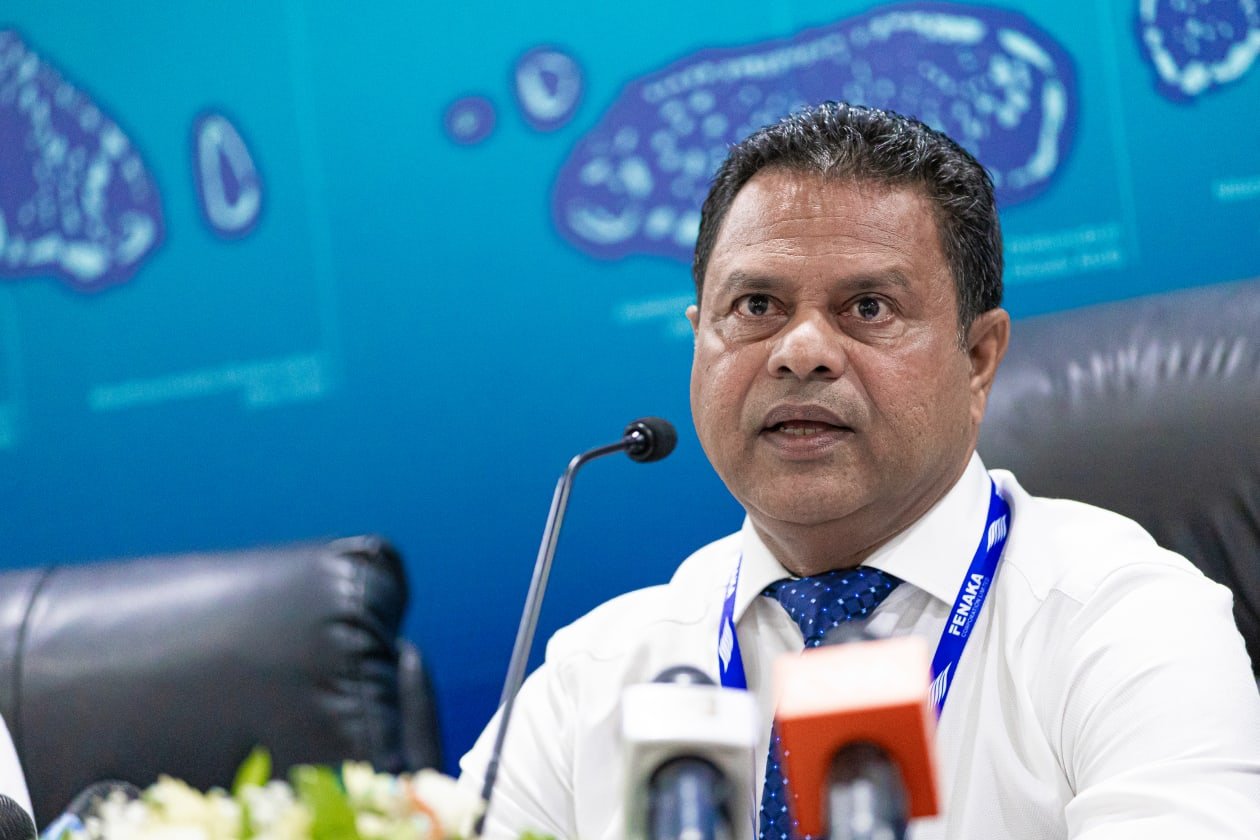
Fenaka Corporation's debt to various contractors amounts to MVR 1.4 billion, Managing Director Ahmed Saeed said on Wednesday.
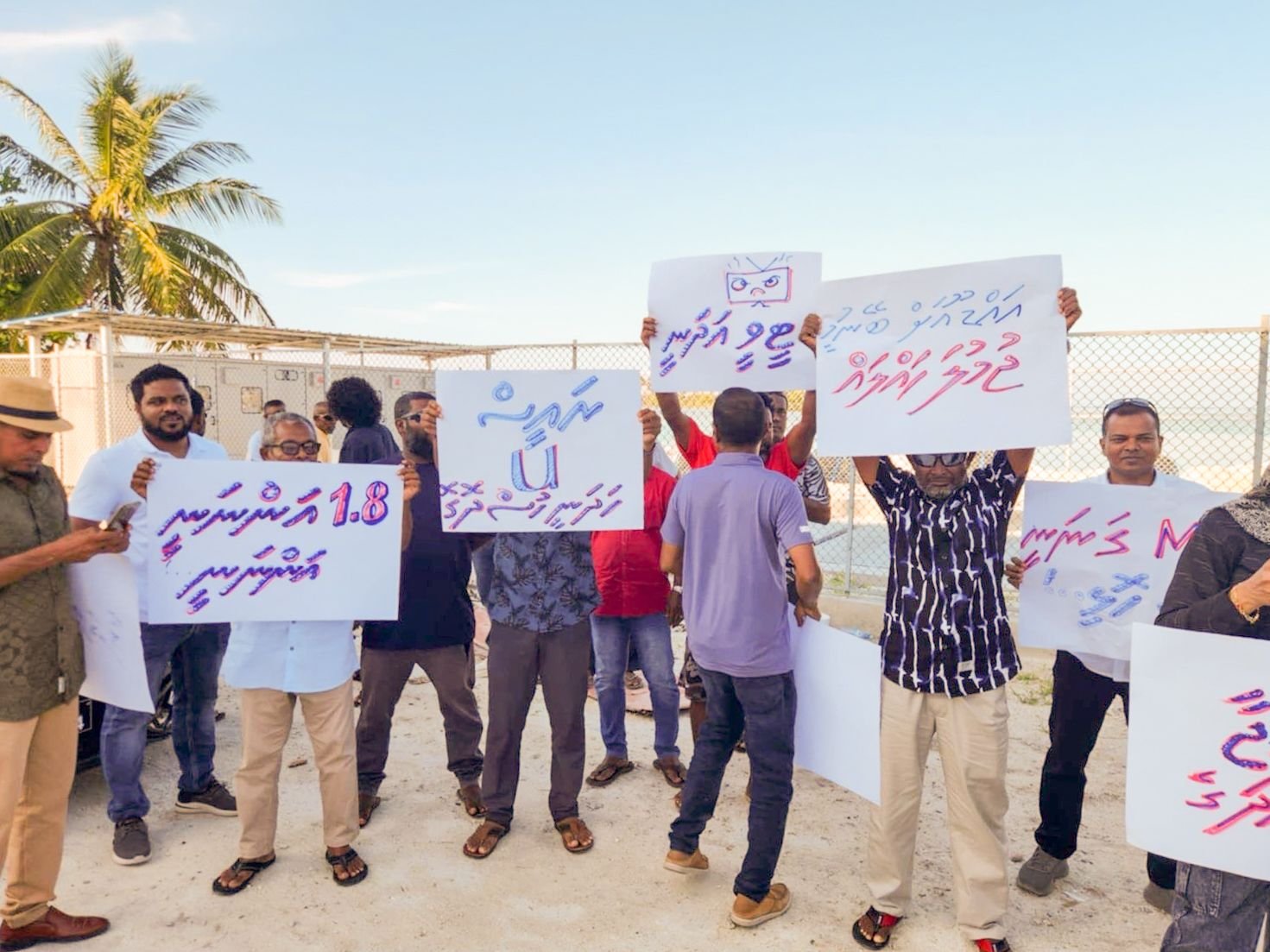
Earlier this year, the state utility company's failure to make payments to private companies that carried out various projects prompted protests in front of the Fenaka office. The issue was also submitted to parliament.
A resolution submitted last April by Madduvari MP Adam Shareef alleged that Fenaka owed more than MVR 2.8 billion to companies. But the resolution was rejected by parliament.
Asked about the dues by Adhadhu at a Fenaka press conference, Saeed said the outstanding payments were about MVR 1.4 billion, which the company has been clearing monthly.
Payments that have been delayed for a long time involved bills with problems, he said.
"We have always been paying that money every month. We have been paying to the extent agreed upon between us and them," Saeed said.
With the bills that did not have problems, some have not been paid for one year or one and a half years, he said. The other bills were unpaid due to problems, he added.
Different payment periods were contracted with different companies, Saeed said.
"I referred to the periods for bills that were not cleared in 90 days. In the situation that we aren't able to clear, as I said, if problems are not faced, it might be that some people want to go to court, others want to settle out of court, there are many such stages. As such, I think the longest would be bills between one year and one and a half years," Saeed said.
As of March this year, the number of companies owed payments by Fenaka exceeded 1,000, most of which were small businesses that were contracted to carry out various work, Adhadhu has learned.
Saeed said Fenaka's debt grew by a total of MVR 1.9 billion under the current administration.
This was mainly because of overdue infrastructure on islands that were not undertaken by previous governments, he argued.
"Most of the projects we're carrying out today are targeted to be completed by April 2024. So our forecasts show that Fenaka's debt can be paid from Fenaka's income and we could settle about 90 percent of the debt by the end of 2027," he said.
Fenaka's income has grown 40 percent under the outgoing government and modern facilities established by the company could used to provide utility services for the next 40 years without further investments by future governments, Saeed said.
Addressing allegations about employees hired for political reasons, Saeed said Fenaka currently has 8,108 employees, out of which 5,909 were permanent staff and 2,199 were temporary employees hired for various projects.
Fenaka's hiring increased this year due to the completion of water and sewerage projects on several islands, which required more employees for operations, Saeed said.
Employees were also needed on shift duty at powerhouses and ice plants, he added, defending the company's workforce, which is the largest among all state-owned enterprises.