Google AI tool predicts danger of genetic mutations

Sep 20, 2023, 5:34 AM
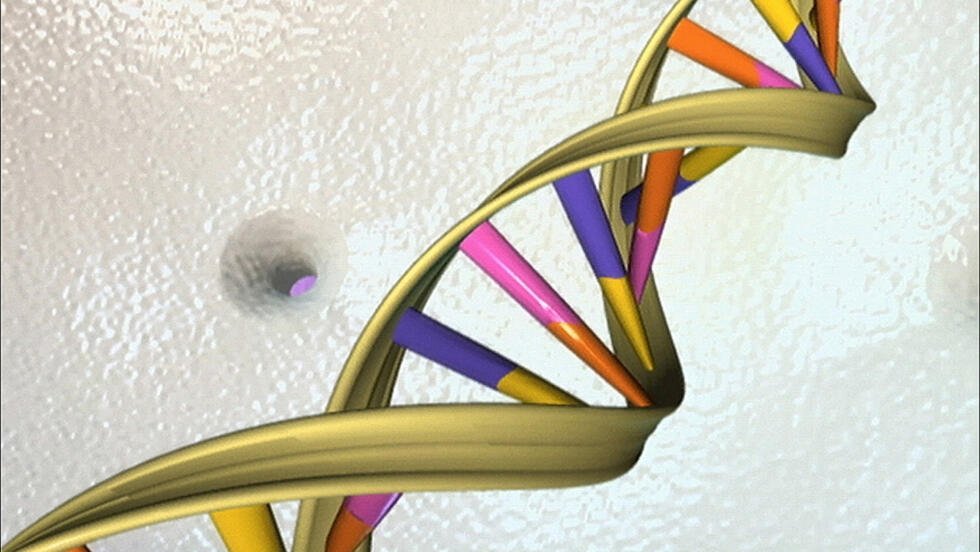
Google's new AI tool can read DNA like a language, and see immediately if a word substitution will change the meaning of that sentence, the company says. -- Photo: AFP

Google's new AI tool can read DNA like a language, and see immediately if a word substitution will change the meaning of that sentence, the company says. -- Photo: AFP

Researchers at Google DeepMind, the tech giant's artificial intelligence arm, on Tuesday (Sep 19) introduced a tool that predicts whether genetic mutations are likely to cause harm, a breakthrough that could help research into rare diseases.

The findings are "another step in recognising the impact that AI is having in the natural sciences," said Pushmeet Kohli, vice president for research at Google DeepMind.

The tool focuses on so-called "missense" mutations, where a single letter of the genetic code is affected.

A typical human has 9,000 such mutations throughout their genome; they can be harmless or cause diseases such as cystic fibrosis or cancer, or damage brain development.

To date, four million of these mutations have been observed in humans, but only two percent of them have been classified, either as disease-causing or benign.

In all, there are 71 million such possible mutations. The Google DeepMind tool, called AlphaMissense, reviewed these mutations and was able to predict 89 percent of them, with 90 percent accuracy.

A score was assigned to each mutation, indicating the risk of it causing disease (otherwise referred to as pathogenic).

The result: 57 percent were classified as probably benign, and 32 percent as probably pathogenic - the remainder being uncertain.

The database was made public and available to scientists, and an accompanying study was published on Tuesday in the journal Science.

AlphaMissense demonstrates "superior performance" than previously available tools, wrote experts Joseph Marsh and Sarah Teichmann in an article also published in Science.

"We should emphasize that the predictions were never really trained or never really intended to be used for clinical diagnosis alone," said Jun Cheng of Google DeepMind.

"However, we do think that our predictions can potentially be helpful to increase the diagnosed rate of rare disease, and also potentially to help us find new disease-causing genes," Cheng added.

Indirectly, this could lead to the development of new treatments, the researchers said.

The tool was trained on the DNA of humans and closely-related primates, enabling it to recognise which genetic mutations are widespread.

Cheng said the training allowed the tool to input "millions of protein sequences and learns what a regular protein sequence looks like".

It then could identify a mutation and its potential for harm.

Cheng compared the process to learning a language.

"If we substitute a word from an English sentence, a person that is familiar with English can immediately see whether this word substitution will change the meaning of the sentence or not."

This story was produced by AFP.
Comments

Read More

Latest News

Priority should be sale of assets to generate immediate liquidity

Former President Mohamed Nasheed urged the Maldives to prioritize selling assets for immediate liquidity rather than long-term projects like the $20 billion Rasmalé development. He argued the UAE-backed waterfront deal will not provide the urgent cash flow needed to resolve the nation's current financial crisis.

Police seek charges against six men for assaulting officers

Maldives Police are seeking charges against six men for assaulting officers during a drug search in Maafushi. Five suspects remain in custody, while one was released by the court. Authorities have also appealed the release of a seventh individual involved in the August incident.

No tax concessions for UAE developer in Rasmale' project

The Maldives government awarded the $20 billion Rasmalé project to UAE developer Eagle Hills without tax concessions or exemptions. All business activities will follow national tax laws, with payments processed through local banks. The state expects over $11 billion in revenue from sales fees and commercial revenue sharing.

No details on size and value of land given to Dubai company

The Maldives government signed a $20 billion deal with Dubai’s Eagle Hills to develop a massive integrated zone in Rasmalé. While the project promises 54,000 jobs and housing, officials have withheld specific details regarding the land size, valuation, and lease terms. The area is expected to operate as a special economic township.

Rasmale' investor to build 5,000 housing units in Hulhumale'

The Maldivian government has partnered with UAE-based Eagle Hills to build 5,000 housing units in Hulhumalé using a contractor financing model. This agreement follows a massive $20 billion deal for the firm to develop Rasmalé. The project will feature luxury residences and a world-class marina without impacting existing housing plans.

AMFA concludes first Junior Lifeguard Program

The Australia Maldives Friendship Association successfully completed its first Junior Lifeguard Program pilot in Thulusdhoo and Fuvahmulah. The initiative trained youth in water safety and rescue skills to enhance maritime security. AMFA plans to expand the program across the Maldives by 2027 through partnerships with local councils.

Project to build international bowling arena in Hulhumale'

A private company has been awarded a MVR 20 million project to build the Maldives' first international-standard bowling arena in Hulhumale'. The two-story facility aims to host global competitions, though the direct award process lacks an official statement. This project is part of a broader plan to develop world-class sports infrastructure.

Newsletter

Get the latest news delivered straight to your inbox