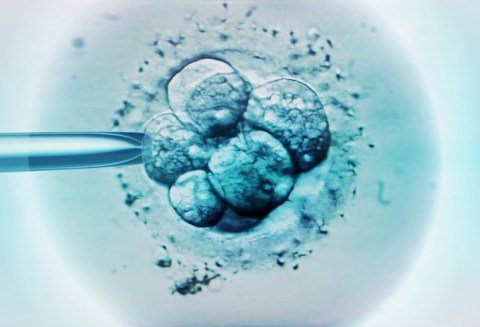
Scientists have developed human embryo-like structures without using sperm, an egg or fertilisation, offering hope for research on miscarriage and birth defects but also raising fresh ethical concerns.
Earlier this year, several labs around the world released pre-print studies that had not been peer-reviewed, describing their development of early human embryo-like structures.
But now one group's research has been published in the peer-reviewed journal Nature, describing how they coaxed human embryonic stem cells to self-organise into a model resembling an early embryo.
The research was welcomed by some scientists as an "impressive" advance that could help unlock secrets about the precarious early stages of pregnancies, when failure is most common.
The work will however renew debate on the need for clearer ethical rules on development of lab-grown human embryo models.
The researchers, led by Palestinian scientist Jacob Hanna at the Weizmann Institute in Israel, harnessed the power of embryonic stem cells, which can become any kind of cell.
They produced embryo models up to 14 days old, which is the legal limit for human embryo lab research in many countries, and the point at which organs like the brain begin to develop.
The researchers say their work differs from those of other teams because it uses chemically rather than genetically modified embryonic stem cells and produces models more like real human embryos, complete with yolk sac and amniotic cavity.
These similarities could make the models more useful for research into conditions like miscarriage, birth defects and infertility, said James Briscoe of Britain's Francis Crick Institute.
The model "seems to produce all of the different types of cells that form tissues at this early stage of development," said Briscoe, principal group leader and associate research director at the biomedical research charity.
The research "is a step towards opening a window on the period of human development where many pregnancies fail and which has been really difficult to study up until now."
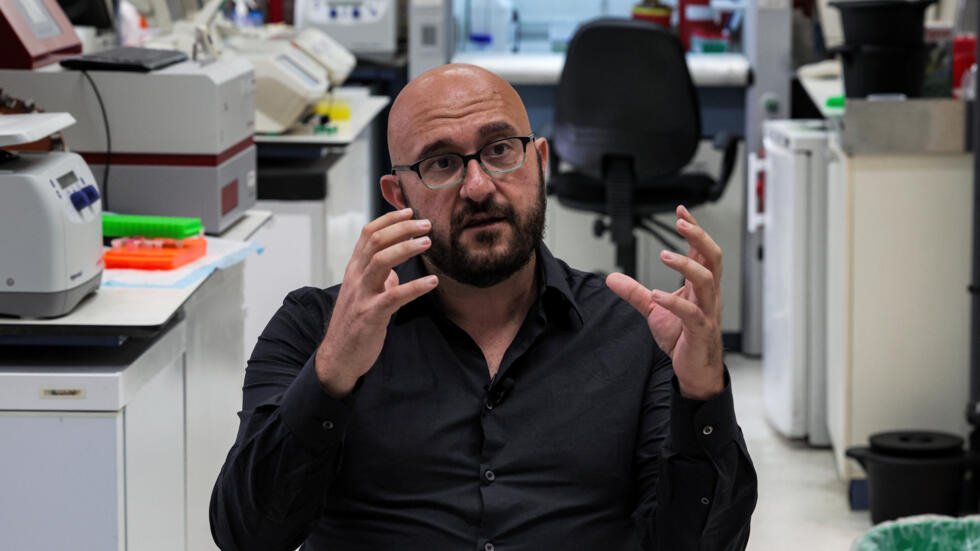
The researchers, led by Palestinian scientist Jacob Hanna at the Weizmann Institute in Israel, harnesses the power of embryonic stem cells. -- Photo: AFP
Both the researchers and scientists not involved in the work emphasised that the models should not be considered human embryos.
The structure "highly resembles, but (is) not identical, to the in utero situation", the research notes.
The success rate on generating the models was also low, with the stem cells organising correctly just a small percentage of the time.
Still, "in contrast to similar studies published earlier this year, these embryo-like structures contained most of the cell types found in developing embryos," said Darius Widera, an expert in stem cell biology at the UK's University of Reading.
The research and other recent work shows "that models of human embryos are getting more sophisticated and closer to events that occur during normal development."
That highlights "that a robust regulatory framework is more needed than ever before", he added.
In Britain, Cambridge University has begun developing the country's first governance framework for stem cell-based human embryo models.
British law prohibits the culturing of human embryos in labs beyond the 14-day mark, but because the structures derived from stem cells are formed artifically, they are not explicitly covered by existing regulations.
Still, most researchers have adopted voluntary limits on their work at this stage.
The Weizmann Institute research did not develop its models beyond 14 days and does not involve transferring the models into a human or animal womb.
This story was produced by AFP.