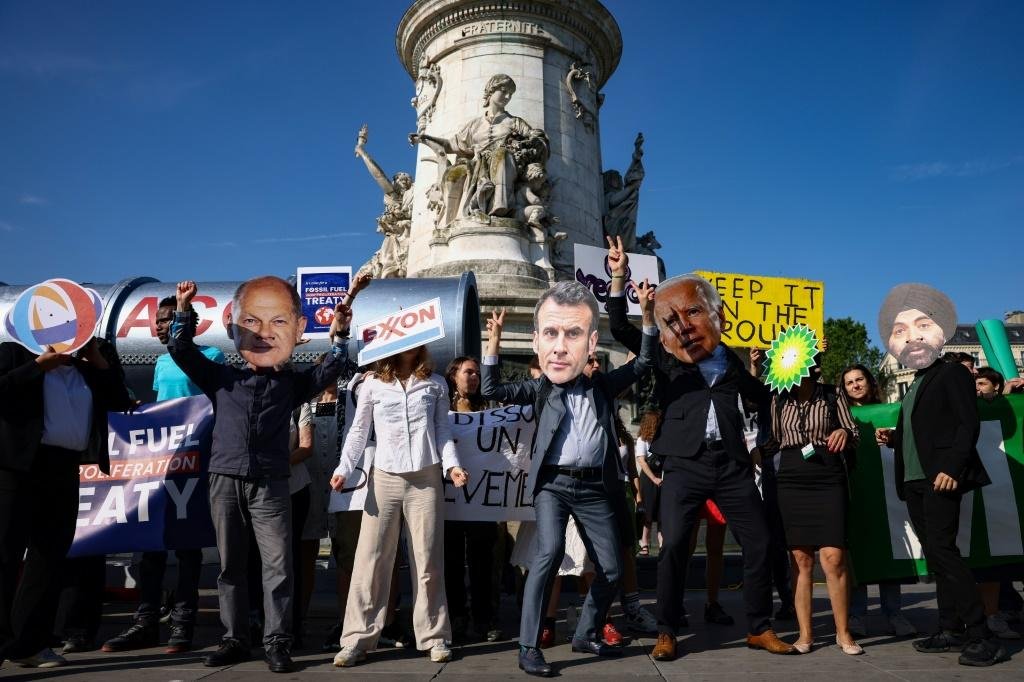
Paris, France (June 23) - A global climate summit wrapped up Friday with leaders agreeing that the international financial system was woefully inadequate in an era of global warming, after taking a number of small steps to helping debt-burdened developing nations.
While host country France pitched the conference as a consensus-building exercise, leaders were under pressure to produce clear outcomes from the two-day meeting as economies stagger under growing debt after successive crises in recent years.
The summit comes amid warnings that the world's ability to curb global warming is reliant on a massive increase in clean energy investment in developing countries.
French President Emmanuel Macron hailed a "complete consensus" to reform global financial institutions and make them "more efficient, fairer and better suited to the world of today".
Some 40 national leaders gathered in Paris, most from developing countries whose economies have been buffeted by a succession of crises in recent years, including Covid-19, Russia's invasion of Ukraine, soaring inflation and extreme weather events.
The conference heard time and again that the nearly 80-year-old financial system -- underpinned by the World Bank and International Monetary Fund -- was no longer fit-for-purpose in facing 21st-century challenges.
"With this mechanism, the rich are always rich and the poor are always poor," said Brazilian President Luiz Inacio Lula da Silva.
Work together
While there was agreement on the broad outlines of the problem, there was less progress on steering the global financial juggernaut in a new direction, though there were several incremental initiatives and advancements on existing promises.
"We only have this planet and unless you have a plan to live on Mars that I don't know about, then we need to work together to make it better," Barbados Prime Minister Mia Mottley, who has led the drive for reform, told AFP.
Mottley, whose Caribbean island nation is threatened by rising sea levels and tropical storms, welcomed the acceptance by the World Bank and others of "natural disaster clauses" in debt.
World Bank president Ajay Banga on Thursday said the lender would introduce a "pause" mechanism on debt repayments for countries hit by a crisis so they could "focus on what matters".
One key announcement came from IMF chief Kristalina Georgieva, who said a pledge to shift $100 billion of liquidity-boosting "special drawing rights" into a climate and poverty fund had been met.
Friederike Roder, Vice President of Global Advocacy at Global Citizen, said overall the progress made was "not sufficient", pointing out that the IMF target included a US pledge of $21 billion that is stuck at Congress.
But she said the meeting had managed to "totally change the conversation" on tough issues that have up to now been mostly kicked into the long grass.
Observers have also hailed the strong leadership role of developing nations at the summit, including Barbados, Kenya and the V20 group of more than 50 climate vulnerable countries, which all came with a suite of ideas.
Roadmap
Avinash Persaud, the architect of the Barbados Bridgetown Initiative plan to reform the global financial system, said in the past solutions presented by richer nations had been marginal and like "childish toys".
"We now have an adult roadmap," he told reporters. "We have not got anywhere near the key numbers. But we have a roadmap."
An official summary of the meeting prepared by France expressed hope that a pledge to deliver $100 billion a year in climate finance to poorer nations by 2020 would finally be fulfilled this year -- although actual confirmation the money has been delivered will take months if not years.
And Zambia, which defaulted on its debt after the Covid pandemic broke out, hailed a "significant step" after securing some financial relief as its main lender China and other creditors agreed to restructure $6.3 billion in loans.
This week, the International Energy Agency said annual investment just for clean energy in these countries will need to jump to nearly $2 trillion within a decade.
This is crucial to keep alive the Paris Agreement goal of limiting global warming to "well below" two degrees Celsius since pre-industrial times, and below 1.5C if possible.
The meeting summary called for work on a range of international taxes to finance the fight against climate change and poverty.
The idea that gained the most traction was a levy on shipping emissions -- ahead of a key meeting of the International Maritime Organisation in July.
This story was produced by AFP.