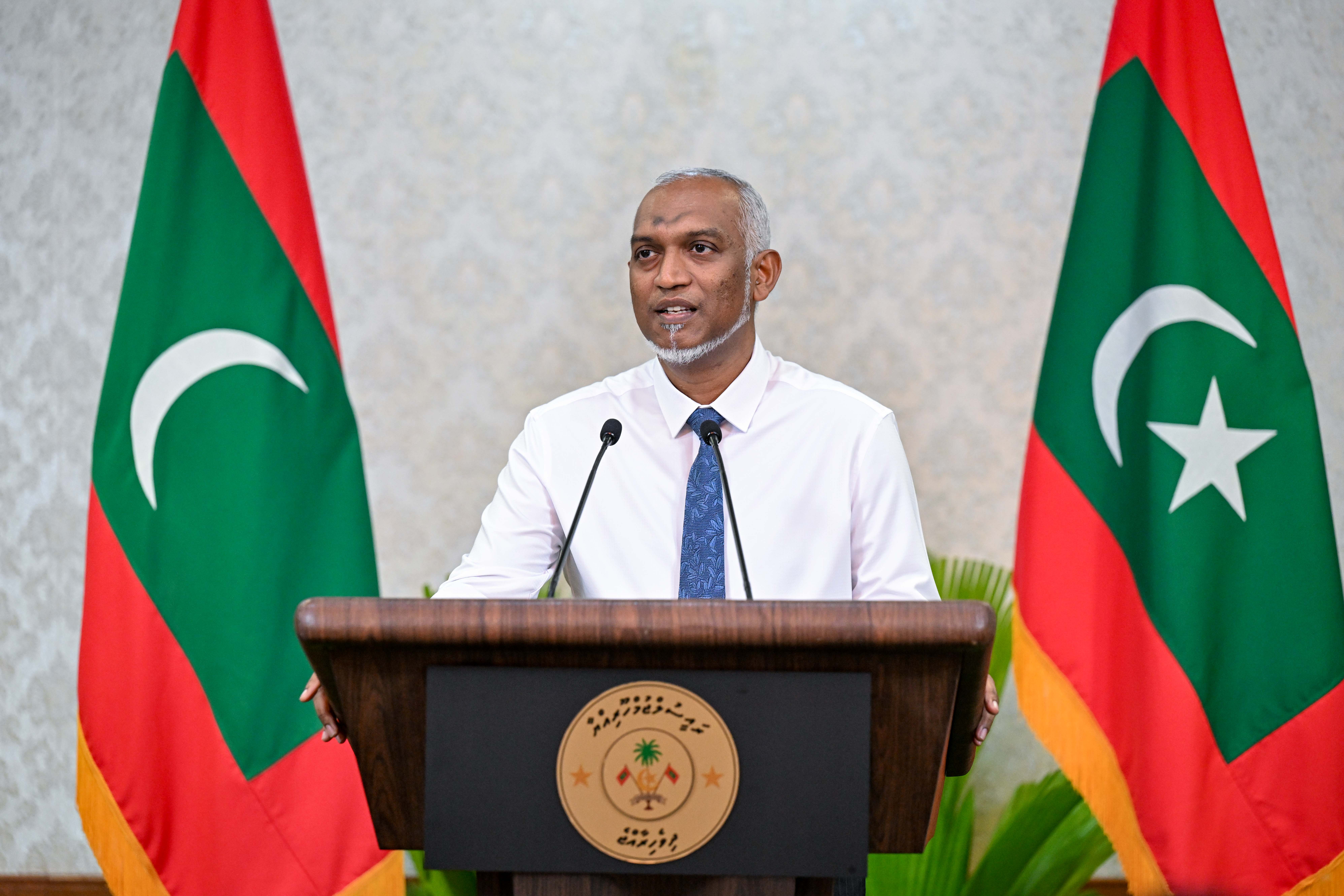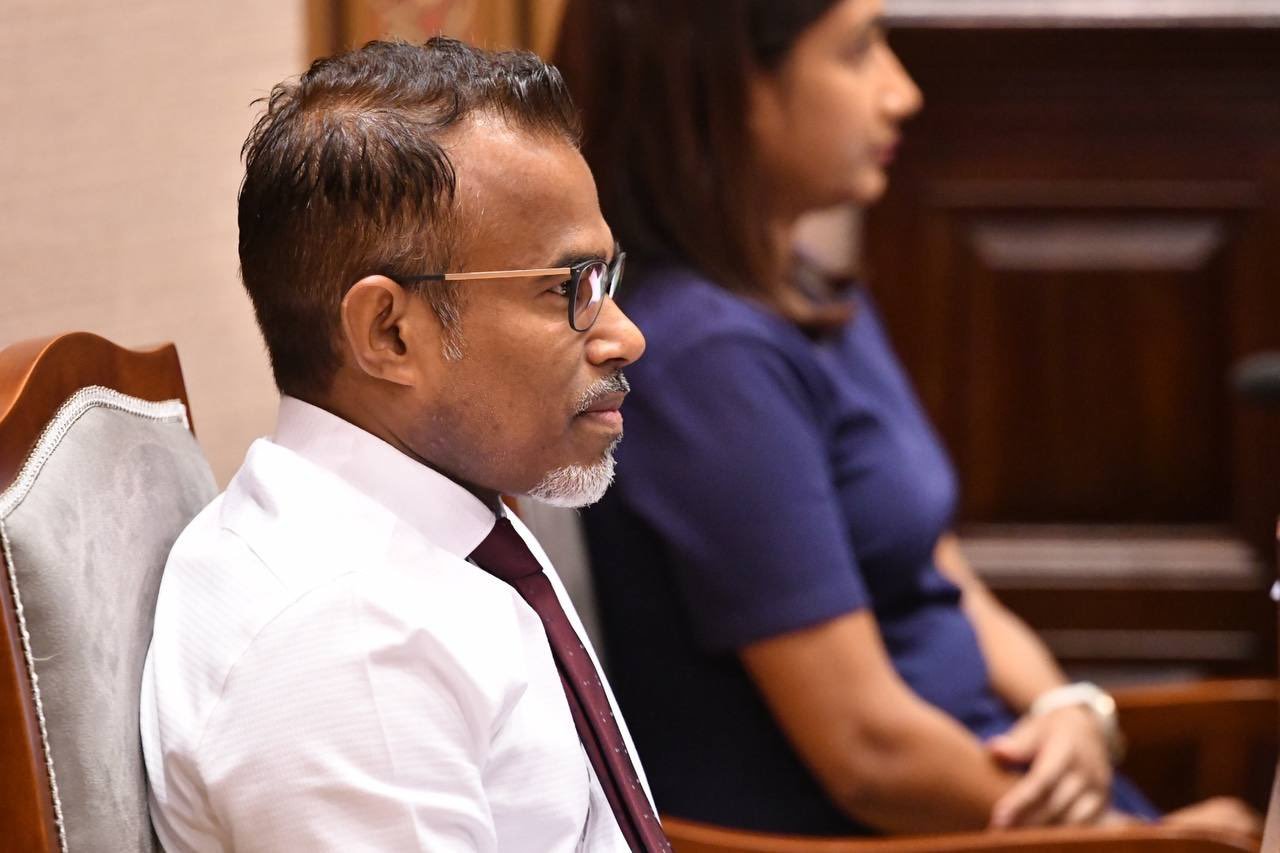
Attorney general Ibrahim Riffath said on Monday that he served the highest interest of the state in a maritime boundary dispute where the country's southern exclusive economic zone (EEZ) was determined, accusing previous administrations of negligence.
Defending himself in response to a no-confidence motion filed against him over the boundary dispute, Riffath said he "prioritized the Maldivian state's highest interest in the dispute over the southern EEZ."
"No previous government dared to make a decision on behalf of Maldivians. I note that what was done, unintentionally or not, was to have been extremely negligent," Riffath said.
Speaking in parliament after former attorneys general heavily criticised him over the boundary dispute, Riffath said former attorneys general have been extremely negligent over the southern EEZ.
"The negligence of former attorneys general in the southern EEZ case has been extreme as well. I note this with shame."
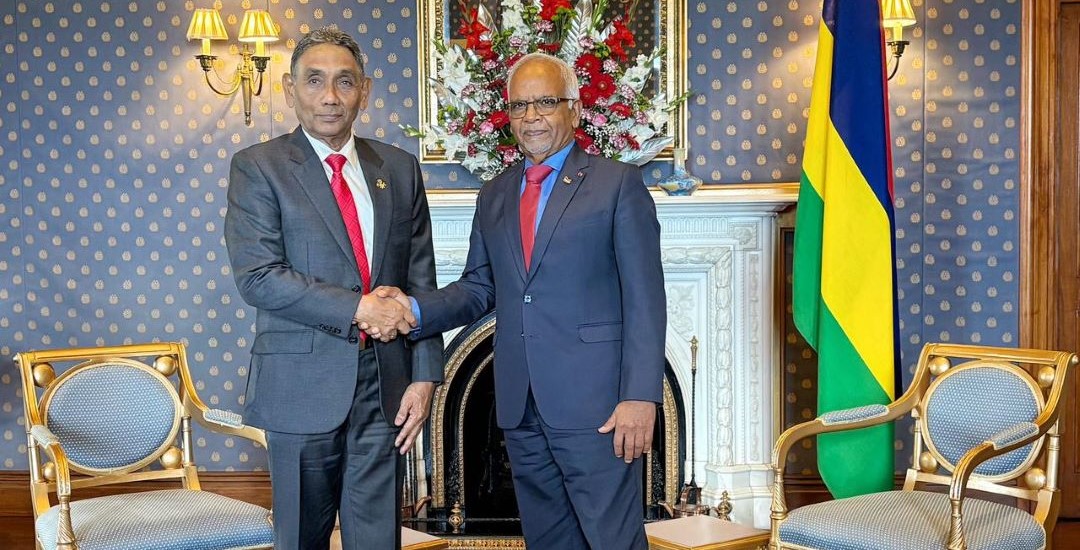
He said Mauritius was able to petition the International Tribunal of the Law of the Sea (ITLOS) against the Maldives in 2019 because former governments failed to resolve the dispute.
"I note that no former government resolved the dispute over the southern EEZ. The result of that was Mauritius suing the Maldives in 2019," the attorney general said.
The ITLOS judgment
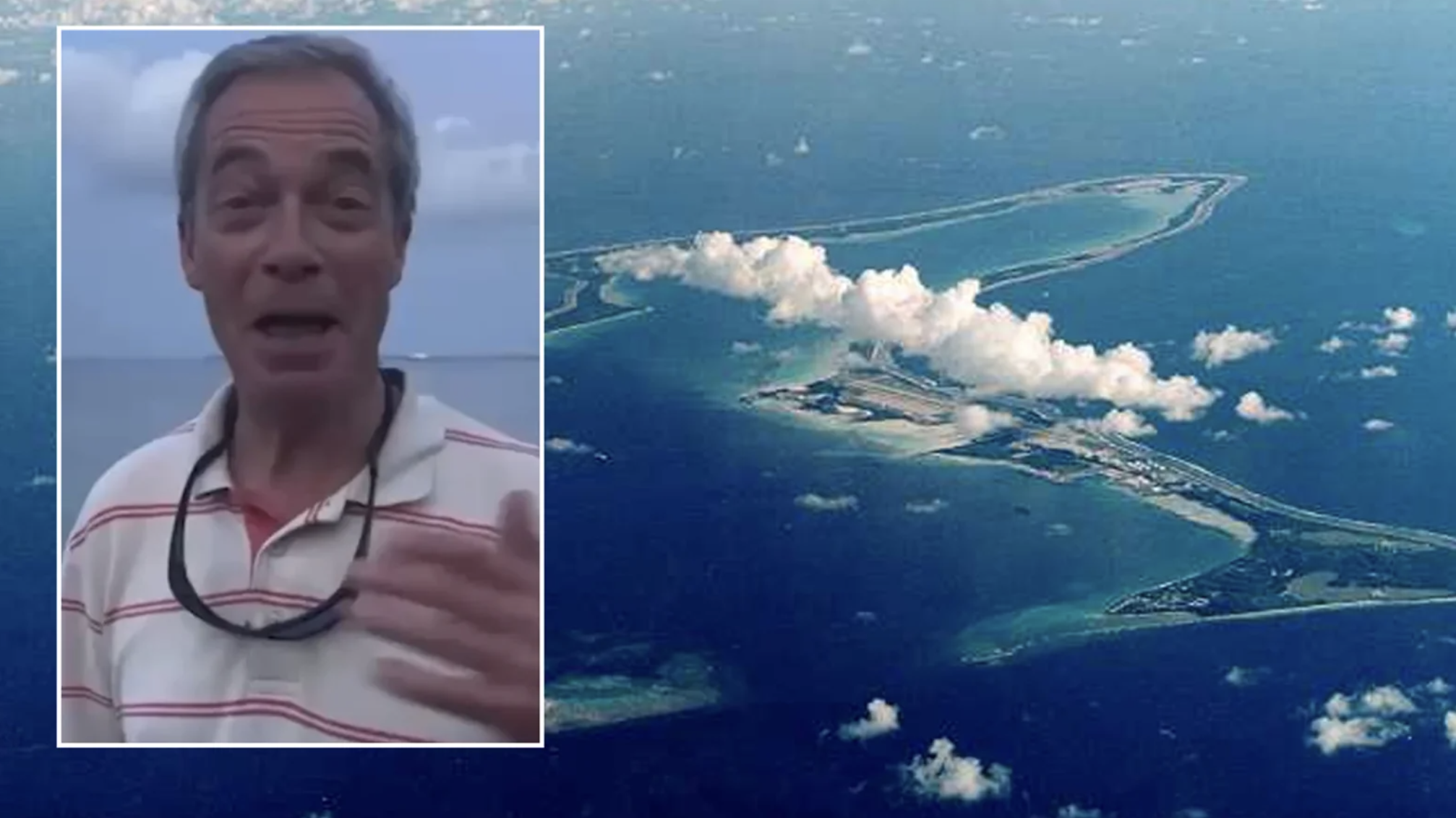
Neither the Maldives nor Chagos has the full 200-nautical mile exclusive economic zone and there is an overlapping area of about 92,000 square kilometers.
A maritime border was never demarcated because of the longstanding sovereignty dispute over Chagos.
In cases where countries do not agree on determining a boundary, international norms say "equidistance" must be followed. The main dispute between the countries at ITLOS concerned the baselines for determining the boundary.
In Mauritius's proposal, the base point was a low-tide elevation called Bleinhem Reef. The Maldives objected to this, arguing that a base point could not be set at reefs visible in low tide.
In its judgment, ITLOS supported the arguments made by the Maldives. The judgment delivered by a special chamber of ITLOS held that there were no grounds to draw the equidistant line from a low-tide reef to determine the boundary.
The ITLOS judgment divided the 92,563 square kilometers overlapping area with 47,232 kilometers to the Maldives and 45,331 kilometers to Mauritius.
As Mauritius failed to establish a claim to the outer continental shelf north of Chagos, the tribunal's judges also decided unanimously not to delimit the outer continental shelf between Chagos and the Maldives as requested by Mauritius.