Advertisement



Public disclosure of debt repayment plans is a common policy in the financial management of emerging economies. Its purpose is to gain the trust of the general public and the trust of the world's financial institutions. This is a common policy agreed upon by civilised countries.
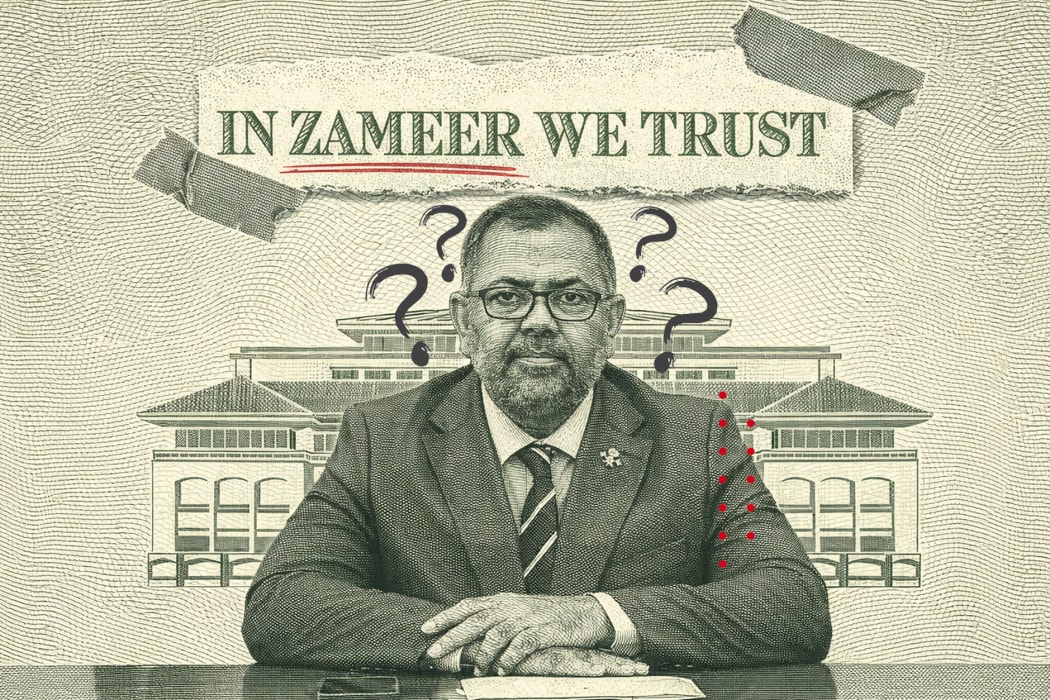
However, as the deadline for the USD 500 million sukuk approaches on April 8, the Muizzu administration has kept its payback plan secret.
According to Finance Minister Moosa Zameer, the secret plan to repay the sukuk is a strong financial shield designed by the government. The purpose is to protect economic stability and maintain investor confidence, he said. The minister did not say how secrecy wins investor confidence.
"We will publish all that later, but before that, markets will react. This is what is done with investors. So some data, some information, we can't reveal exactly and say here is the plan," Zameer said recently.
The question is, if this is a good plan, why are the details kept secret? For a country with a downgraded credit rating, wouldn’t it be more effective to disclose that it has a good plan in order to gain investor confidence?
Critics say the government is playing a risky game at a time when the global economy is in turmoil.
A financial expert who spoke to Adhadhu on the topic said he did not see how not disclosing the information would increase investor confidence. He said that as long as the financial accounts are kept a state secret, the international market will lose confidence in the Maldives, and the cost of debt repayment will increase day by day.
"Fiscal transparency is the way to gain investor confidence. Secrecy suggests that the government itself is not so confident in the sukuk payback plan," he said.
Although the entire plan was not disclosed, the government's "hybrid" strategy was revealed. That is using the Sovereign Development Fund (SDF) to pay off part of the debt and refinance the other part. Zameer said this is a better and more profitable option than selling a new bond or sukuk.
The benefits include reducing total debt, providing fiscal space to raise funds for projects and changing the views of the World Bank, International Monetary Fund (IMF) and credit rating agencies on the Maldives' financial situation, he said.
Despite Zameer's comments, this sukuk, in fact, had the potential to be refinanced in 2025 or 2024. It was included in the government budgets. The benefits mentioned by the minister could have been made possible two years ago. But the delay is due to the government failing to take advantage of available opportunities.
The government's current refinancing methods are also questionable, due to reports of a loan at a high interest rate. However, the government has repeatedly said it will not take loans at high interest rates.
Financial experts say, despite the government's assurance, the only possible loans in this situation are short-term, high-interest loans. Relying on such loans contradicts the "technical" stability the government wants to show to the IMF, World Bank and rating agencies and exposes the country's fragility.
Zameer’s comments indicate that he believed it would be most beneficial to remain silent now and respond with the result. This means the success of the government's "secret payback" strategy can only be judged after the money is paid.
However, it may be too late when this information is disclosed. There are also doubts about whether all the questions will be answered. The biggest concern is the future of the country amid the instability of the war in the Middle East.
Withdrawal of money from the SDF and payment of part of the sukuk is only possible this time. At that point, we lose the biggest buffer put in place to avoid the fears of instability.
The government should reconsider whether it is in the interest of the people of the Maldives, the biggest investors in this country, to keep this information secret.
---
This article was first written in Dhivehi by Adhadhu's Aman Haleem.
Comment