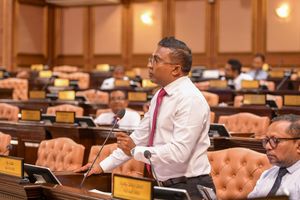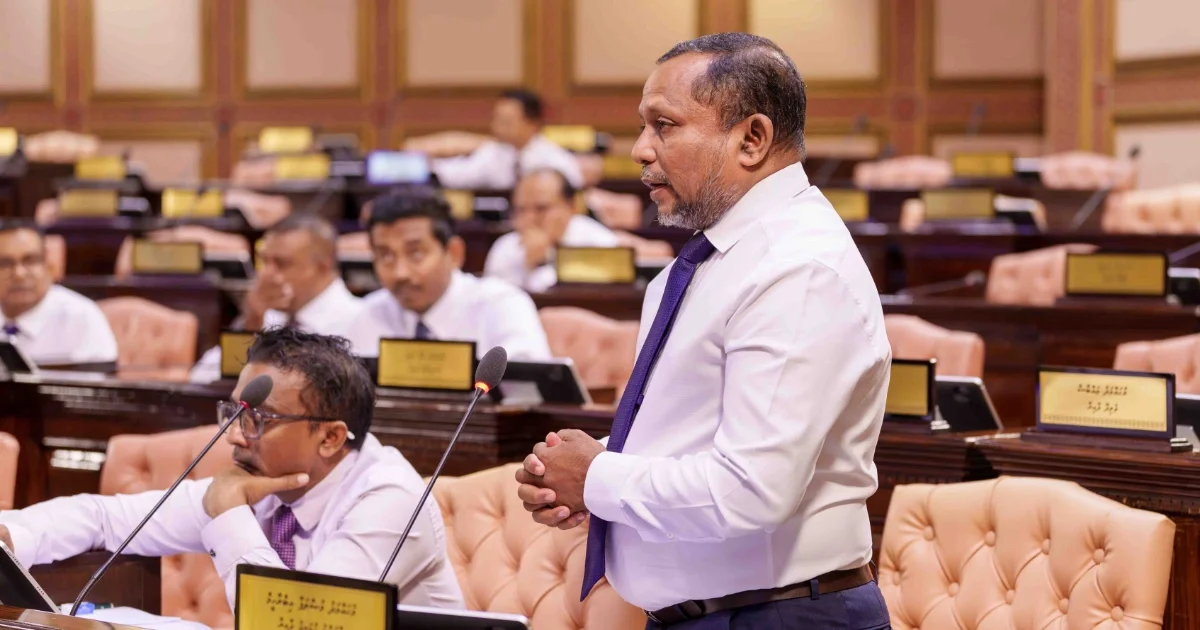
Maafannu West MP Mohamed Musthafa Ibrahim has said that the government’s proposed amendments to the Education Act will facilitate home-schooling for students who become pregnant while enrolled in school.
The proposed amendment stipulates that, based on a child's physical condition, disability, or other special circumstances, an exemption from physical school attendance may be granted. In such cases, education can be provided through a home-schooling program in accordance with established regulations.
During the debate on the bill, Musthafa emphasised that students who become pregnant should not be deprived of their right to education. He noted that the current amendment provides a framework to ensure these students can continue their studies.
"It may be a sensitive or even embarrassing topic for some. However, I must point out that within our education system, we do encounter instances where students become pregnant during their school years," Musthafa said.
"Regardless, there is no legal basis to deprive a child of that age of an education or to expel them. We must establish a mechanism within the education system to ensure they receive their schooling."
Highlighting that the Constitution and Maldivian laws mandate this right, Musthafa noted that his observations were based on personal experience.
"Therefore, we must find a way to facilitate their education at home without marginalising them from the system. This law paves the way for that," Musthafa added.
He further noted that beyond pregnant students, the amendment would also benefit children with disabilities and those in special circumstances due to accidents, allowing them the opportunity to study from home.
The amendment, sponsored by Huraa MP Anara Naeem, also clarifies that children who are unable to attend school or participate in home-schooling due to the severity of their disabilities will not be subject to the compulsory education requirement.
The fundamental conditions for providing education under a home-schooling program include:
- The child is unable to attend school due to a physical disability, mental health condition, or other special circumstances.
- The parents or guardians possess the financial capacity to provide education under a home-schooling program.
- The child is registered at a school within the formal education system to facilitate attendance monitoring.
The amendment further states that the Ministry must outline specific criteria in its regulations to determine when a child’s degree of disability exempts them from compulsory education.
Additionally, the bill specifies that if a child within the compulsory education age bracket completes secondary education recognised by the national system before turning 16, they are no longer required to attend school.
The amendment also mandates that parents must make reasonable efforts to ensure their children receive an education that is appropriate and adequate relative to the child's specific disabilities.