Genocide bill crucial for legal standing in ICJ case: Usham

Oct 27, 2026, 8:11 AM
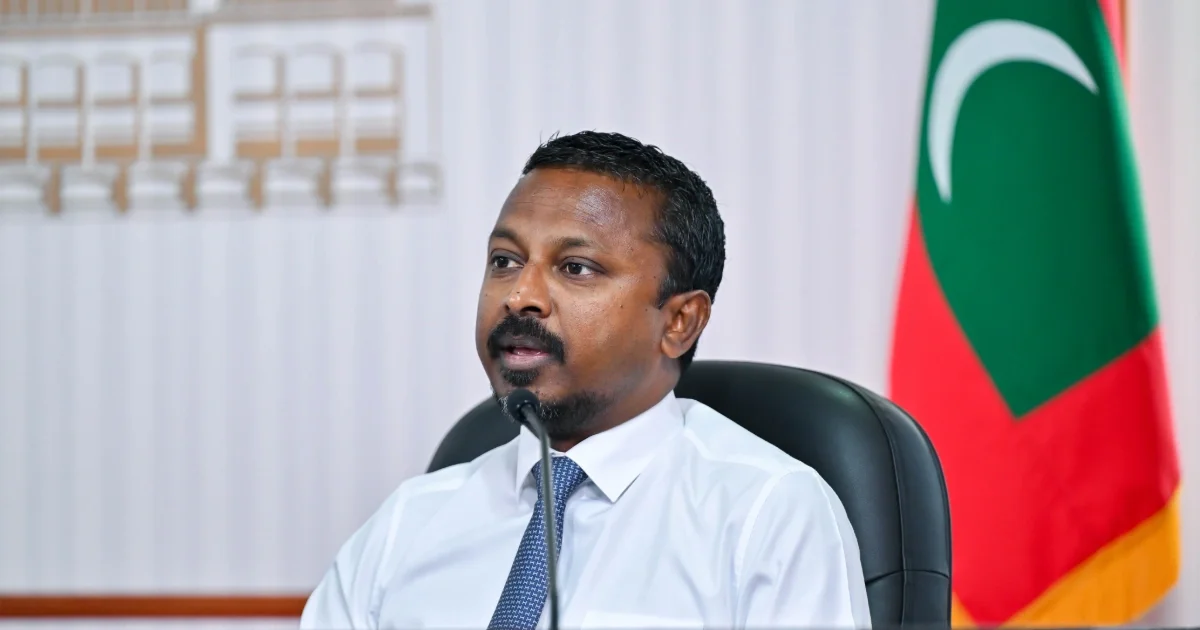
Usham.

Usham.

Attorney General Ahmed Usham has said that criminalising genocide is essential to safeguard the legal arguments presented by the Maldives at the International Court of Justice (ICJ) in defence of Palestinian and Rohingya Muslims.

Usham made these remarks on X amid concern that the proposed bill is an attempt to suppress anti-Zionist sentiment and criticism surrounding the Rasmalé project.

The government-sponsored bill, introduced by Maafannu South MP Abdulla Rifau, was scheduled for its first reading in today’s parliamentary session but was abruptly removed from the agenda. The Parliament Secretariat has yet to disclose the reason for its removal.

Regarding the criminalisation of genocide, Usham noted that the Maldives acceded to the Convention on the Prevention and Punishment of the Crime of Genocide on April 24, 1984. The convention mandates that member states enact necessary domestic legislation and establish criminal penalties for acts of genocide.

"Forty-two years have passed since then, and the Maldives has yet to fulfill this obligation," Usham said.

Usham further emphasised that failing to meet this requirement could undermine the Maldives' efforts to hold nations accountable at the ICJ for ongoing and past genocides against Muslims.

"While the Maldives calls on other nations to respect the Genocide Convention, our failure to fulfil a mandatory obligation under that same treaty impacts the legal standing of the points we submit," he explained.

The Attorney General maintained that the proposed amendment to the Penal Code is a necessary step to align national law with international obligations.

The Maldives formally moved to intervene in the case against Myanmar regarding the genocide of Rohingya Muslims on November 16, 2023. More recently, on October 1, 2024, the country filed to intervene in South Africa’s case against Israel concerning the genocide in Gaza.

The government’s bill defines genocide as acts committed with the intent to destroy, in whole or in part, a national, ethnical, racial, or religious group, including killing members of the group or causing serious bodily or mental harm. Critics argue the current phrasing of the article could be interpreted to penalize Maldivians for anti-Zionist rhetoric if such speech is construed as calling for the destruction of a specific group.

The bill proposes prison sentences ranging from 10 to 25 years for the crime of genocide. It also seeks to criminalise direct and public incitement to commit genocide.

Comments

Read More

Latest News

Life imprisonment for treason under proposed amendments

The Maldivian government has proposed a bill to classify treason as a first-degree felony punishable by life imprisonment. The amendment defines treason as waging war or threatening national sovereignty and bars convicts from state office. This move fulfills a campaign pledge by President Muizzu to impose harsher penalties for betraying the nation.

New amendment criminalises "intentional acts" to harm the economy

The government is amending the Penal Code to criminalize "intentional acts" that harm the economy, with penalties of up to 10 years in prison. Critics argue the law aims to suppress opposition to major state projects like the Rasmalé deal. This move, alongside new media controls, raises significant concerns regarding freedom of expression.

Anti-religious sentiment to be criminalised

The Maldives government has introduced a bill to criminalize genocide and public incitement against religious or ethnic groups. While officially aimed at international compliance, critics fear the broad language will be used to suppress dissent and activism against the Rasmalé deal and Zionist interests.

MDP MPs urge public referendum over Rasmale' deal

MDP lawmakers are calling for a public referendum over a deal to grant 500 hectares of Rasmalé land to a foreign company on a 99-year lease. The opposition argues that such a significant transfer of territory requires direct citizen approval. They insist the public must have the final say on the project's long-term implications.

Four Bangladeshis arrested for smuggling 6kg drugs

Four Bangladeshi nationals were arrested in the Maldives for smuggling 6.75kg of synthetic cathinones via air cargo. The suspects were remanded in custody following a joint operation by police and customs. Separately, a Maldivian man was detained for ingesting 19 drug-filled capsules.

Amendment to allow home-schooling for children with disabilities

MP Anara Naeem introduced an amendment to the Education Act to allow free home-schooling for children with disabilities. The bill permits exemptions from physical school attendance based on a child's specific needs and established guidelines. It also clarifies that those unable to participate in any schooling are exempt from requirements.

Turkish firm ordered to pay MVR 25 million in unpaid taxes

The Maldives High Court ordered Turkish firm Turmaks to pay MVR 25 million in unpaid GST for materials used to build Tree Top Hospital. The court upheld MIRA's assessment, rejecting the company's claim that a verbal agreement shifted tax liability. The ruling emphasizes that the burden of proof for tax exemptions lies with the taxpayer.

Newsletter

Get the latest news delivered straight to your inbox