The government has established a mechanism allowing businesses to offset outstanding taxes against debts owed to them by the state, provided the government transfers the equivalent funds directly to the tax authority.
Under this policy, businesses can settle their tax liabilities by deducting amounts owed to them by government agencies and state-owned enterprises. This offset arrangement also applies to other payments due to the Maldives Inland Revenue Authority (MIRA), including fines and penalties.
However, the regulations stipulate that any such offset will only be finalised once the relevant government agency or state company transfers the outstanding payment due to the private business directly to MIRA.
While business owners may apply for a tax offset, the transaction will only be processed at the point when the government remits the funds to the tax authority on behalf of the taxpayer.
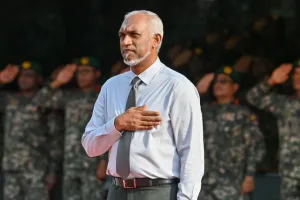
President Mohamed Muizzu first announced the introduction of a tax offset mechanism for businesses during a gathering held last Saturday.
Speaking at the event, Muizzu noted that he frequently receives complaints regarding the government's failure to settle outstanding payments to businesses.
"Parties undertaking various government projects face challenges due to delays in receiving payments. We believe this is an inconsistency that must be addressed. Many in the SME sector have brought these difficulties to our attention," the President said.
Settling outstanding government debts to businesses was a key campaign pledge made by Muizzu. Prior to the parliamentary and local council elections, the President set six different deadlines for the clearance of these debts; however, the payments were not fully settled by any of those dates.