Finance Minister Moosa Zameer announced yesterday that State-Owned Enterprises (SOEs) currently employ over 42,000 staff, as his ministry instructed these companies to reduce their workforce by 33 percent.
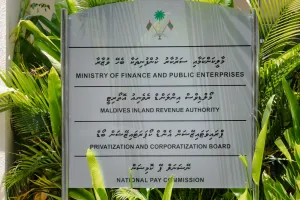
The directive to downsize, issued through the Privatization and Corporatization Board (PCB), is part of a broader cost-cutting strategy initiated in response to the ongoing conflict in the Middle East.
The government has specifically instructed SOEs to lower operational costs by reducing existing staff numbers and freezing recruitment for non-essential positions.
33 percent workforce cut from state companies after political hiring spree
The Finance Ministry has ordered a 33 percent workforce reduction across state-owned enterprises. The directive aims to improve financial sustainability and operational efficiency by cutting overhead costs. Moving forward, companies must adopt merit-based recruitment focused on skills and qualifications.
Providing further details during a press conference held by the cabinet War Committee, Zameer noted that while some companies are being "right-sized," a full 33 percent reduction might not be feasible across all entities.
As an example, Zameer cited Island Aviation, the operator of the national airline, Maldivian. He explained that cutting staff by such a significant margin at companies like Island Aviation could render them unable to operate, making such a move impractical.
Zameer emphasized that the government’s instruction is for companies to maintain a staff level appropriate for their current operations. He further stated that any redundancies must be carried out in strict accordance with established legal procedures.
"I am not saying people should be terminated by sunrise tomorrow. The instruction is to proceed through a systematic process and in full compliance with the Employment Act," Zameer said.
He added that companies have been advised to consider the potential hardships faced by individuals when implementing these layoffs.
Based on Zameer’s estimates of the total SOE workforce, a strict 33 percent cut would put more than 13,000 jobs at risk. However, the final number of redundancies may be lower if certain companies are unable to meet the reduction target.
This sudden shift in government policy, which threatens widespread job losses, comes after a significant surge in SOE employment under the current administration.
The expansion occurred despite the government’s repeated pledges to end the practice of using state companies for political appointments—a tactic it frequently criticised the previous administration for. Furthermore, the administration’s "Homegrown Reform Agenda" had previously included plans to right-size these companies, which had yet to be implemented.
According to the PCB’s Annual Sector Report 2024, there were 35,000 employees in SOEs at the end of 2023, when the current administration took office.
If the current figure cited by Zameer is accurate, it indicates that SOEs have added approximately 7,000 jobs over the past two years and three months.
When combining SOE staff with the estimated 45,000 people working in the broader public sector, the total number of government-dependent employees reaches approximately 87,000.
This figure represents nearly one-third of the Maldives' working population of 270,000. This means one in every three employed persons in the Maldives draws an income directly from the state or a state-owned enterprise.