Despite achieving notable results in development, the Maldives needs to reduce expenditure in all sectors and take urgent corrective measures, the World Bank has said, expressing concern over the state of the economy.
The advice was offered in a statement released yesterday at the conclusion of a four-day visit to the Maldives by Martin Raiser, World Bank Vice President for South Asia.
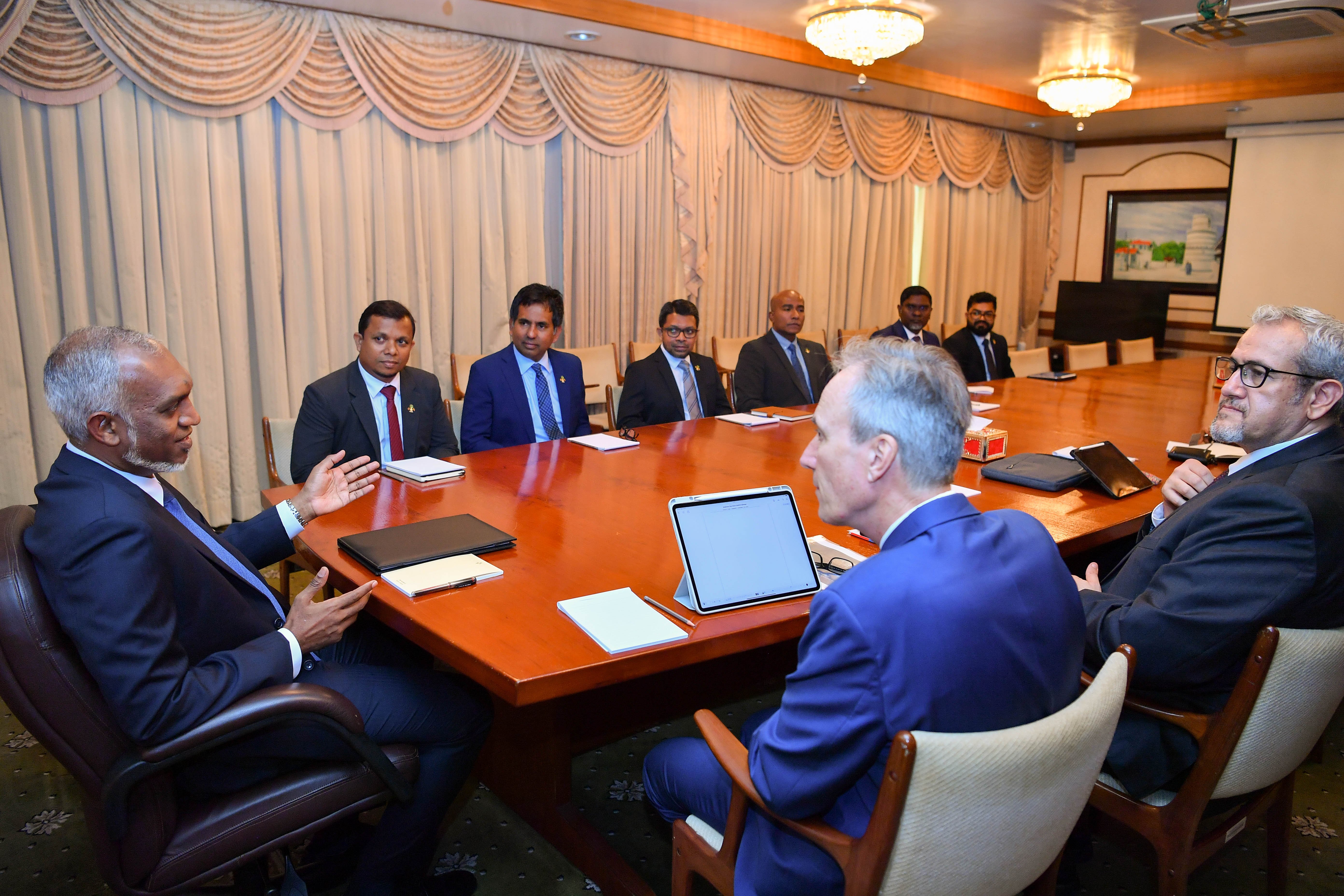
During the visit, Raiser met with President Dr. Mohamed Muizzu and senior government officials. He shared the World Bank's concerns during the meetings.
Raiser stressed the urgent need for fiscal reforms in light of significant risks posed by rising government spending, limited foreign exchange reserves, high debt and elevated global interest rates.
“Maldives has achieved impressive development results, including in improving access to health, education, housing and other public services. However, large fiscal and external deficits put these gains at risk and require urgent measures to contain untargeted spending, raise more revenues and manage debt more prudently," Raiser said.
The first-ever "Human Capital Review for the Maldives" report released by the government and the World Bank on February 6 showed that "regional and gender inequities persist" despite higher human capital in the Maldives compared to regional, small-island nations and other middle-income countries. As public expenses needed to be controlled, the World Bank said the inequities could not be solved by further spending.
"Instead, greater prioritization of spending, targeting of subsidies according to need, and efforts to improve the quality of services, particularly in the less advanced islands, will be required to ensure further progress," the World Bank said, offering technical and financial support for such efforts.
The World Bank and the Maldives have now worked together for 45 years. Ten projects funded by the World Bank are currently ongoing in the country, including a project financed by the International Development Association (IDA), one regional project and one IDA guarantee operation. The total cost of the projects is USD 217 million.
The projects are focused on renewable energy, competitiveness and growth, youth resilience and employability, digital development, urban development, solid waste management, covid-19 response, fisheries, labor, health, education, and social protection. The World Bank also provides analytical support in macro-fiscal monitoring, policies and analysis, financial sector, social protection, and poverty.
The World Bank's concern over the state of the Maldivian economy comes after President Muizzu on Tuesday warned of tough times ahead and indicated difficulties in carrying out development projects due to fiscal constraints.