The global response to the bloodshed in Israel and Gaza has revealed deep divisions, with Western countries increasingly isolated on the global stage, a trend that has gathered pace since the outbreak of the Ukraine war.
On the day of Hamas' unprecedented attacks on Israel, Western countries condemned the group's onslaught in the strongest terms insisting "nothing justifies terrorism".
While some non-Western countries such as Argentina and India have shown solidarity with Israel, many others have simply called for de-escalation including regional heavyweights Saudi Arabia, Egypt, Morocco and Turkey, as well as global powers Russia and China.
Algeria, Iran, Sudan and Tunisia have openly expressed support for Hamas, the Palestinian organisation that controls Gaza.
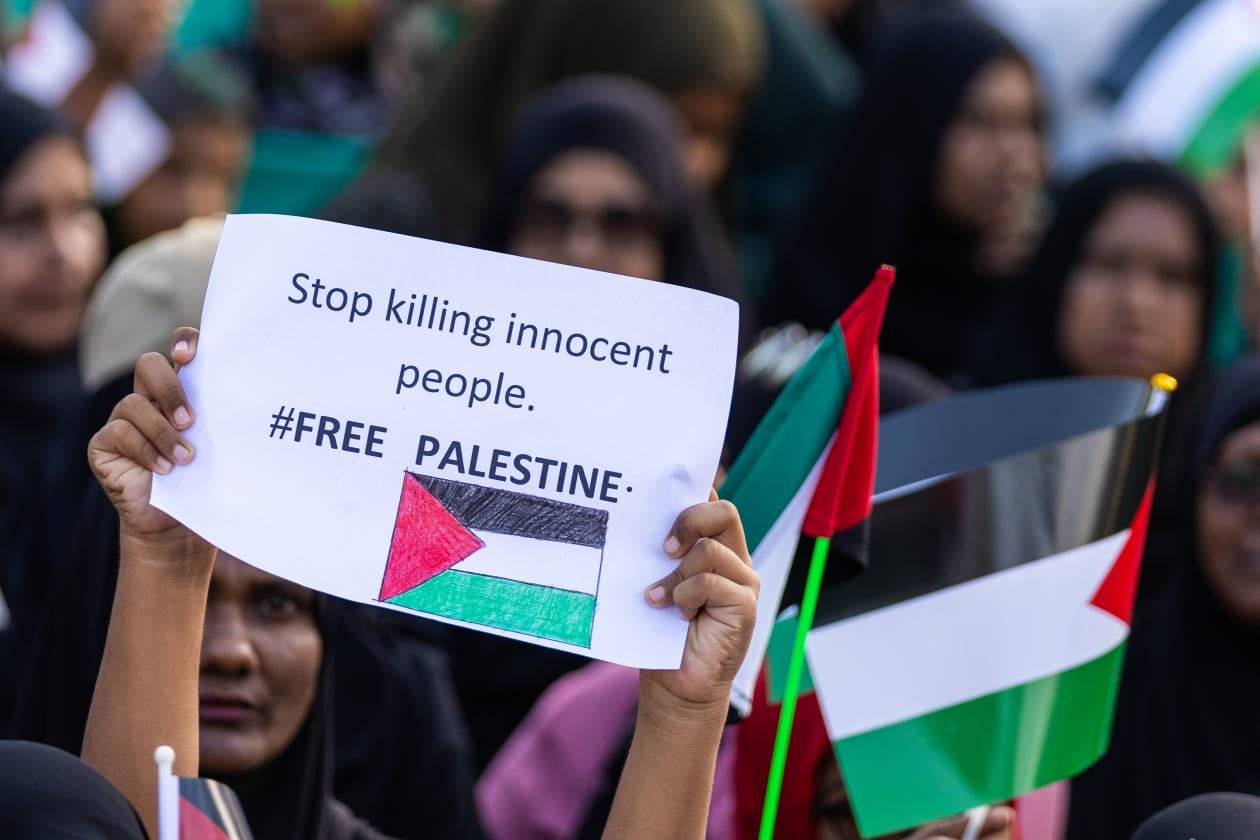
Thousands of people across the Middle East gathered on Friday to demonstrate in support of the Palestinians, including in Jordan and Bahrain.
More than a year-and-a-half after Russia's invasion of Ukraine, a number of countries outside of the West's sphere of influence are refusing to bow to pressure from Ukraine's allies to support Kyiv.
"The two trends intersect in the narratives of the states of the 'global south'," said Hosni Abidi, director of the Geneva-based Center for Arab and Mediterranean Studies and Research.
The war in Gaza "further deepens a fissure already visible over Ukraine".
This conflict "shows the extent of this divide in the majority of the countries of the South -- and particularly in Africa and in the Arab and Muslim world", he said.
In an increasingly fragmented world, all eyes are now on the fate of the Palestinian people.
The issue is especially fraught for those Arab states that have normalised relations with Israel while still proclaiming unwavering support for the Palestinians.
'Sword of Damocles'
"(Arab countries) are now afraid of the reaction of their own people," said Francois Heisbourg of the International Institute for Strategic Studies in London.
Mobilising popular opinion amid such heightened emotion and anger is "the major unknown", said Bertrand Badie, a professor at Sciences-Po Paris.
"Some Arab governments feel that supporting Palestine is too expensive, but their (people's) position is wedded to... the Palestinian cause," he said.
"This is a way for the population to express their own frustrations in authoritarian, corrupt, poorly functioning regimes," he said, recalling the widespread presence of Palestinian flags during the Arab Spring uprisings, as well as during World Cup tournaments.
For countries like Morocco, Jordan and Egypt, mobilising public opinion for the Palestinians or against Israeli actions is a veritable "sword of Damocles", Badie warned.
Palestinian rallying cry
The Palestinian cause has long been a rallying cry of non-aligned countries, he said.
There has been a shift in influence from countries of the "global south" seeking a balanced global order to those non-Western nations seeking to "reintroduce Palestine into a negotiating game".
Brazilian President Luiz Inacio Lula da Silva, who chairs the UN Security Council, called on Wednesday for the protection of Palestinian and Israeli children caught up in the war.
Feelings toward Israel are "bound to evolve as the scale of the human toll is uncovered, alongside the hostage crisis", said Heisbourg.
This is because Israel's response in Gaza "will generate tremendous violence" and a "geopolitical dilemma" between the dismantling of Hamas and the management of hostages.
To a greater extent than in Ukraine, foreigners are among the victims of the Israel-Gaza conflict.
Around 150 men, women and children of various nationalities are being held by Hamas.
Former French foreign minister Dominique de Villepin warned that events were being watched closely by those without a Western perspective, and that such reactions should be "taken into account".
This story was produced by AFP.