Police use of sonic weapon violates Anti-Torture Act: Sawad

Oct 5, 2025, 6:21 AM
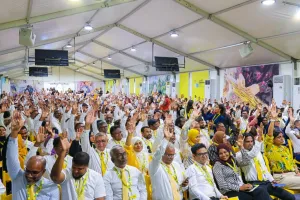
October 3 protest. -- Adhadhu Photo

October 3 protest. -- Adhadhu Photo

Former Attorney General Ahmed Ali Sawad has condemned the police's use of sonic weapon against protestors on October 3 as it violates the Anti-Torture Act.

Police acquired the sonic weapon in 2013, but previous administrations did not use it against the people. It was earlier used as an alert for notices during protests.

But on the night of October 3, police used the sonic weapon continuously, for several minutes, at high volume.

In a post on social media X, Sawad said the use of sonic weapons is prohibited under the Anti-Torture Act as it causes "cruel inhuman treatment."

“[It was] an inhuman and illegal punishment for the demonstrators as well as all the people living in the area,” he stated.

Sawad called on the Prosecutor General (PG), Attorney General (AG) and the Human Rights Commission of the Maldives (HRCM) to investigate and hold the police accountable.

“No one has the right to illegally harm the people living in the area when people protest,” Sawad said.

"Only tyrannical rulers oppress the people."

A sonic weapon is a loud sound produced in a single rhythm using a long-range acoustic device (LRAD).

The police require a standard operating procedure (SOP) for the use of weapons. There are SOPs for the use of pepper spray, tear gas and batons.

However, police have not disclosed the SOP for the use of sonic weapons.

According to police regulations governing the acquisition, possession and use of weapons, a warning must be issued before a weapon is used.

It states that the police must specifically warn about the imminent use of the weapon before its use against any party. But no such warning was issued.

Comments

Read More

Latest News

"Heerapana" set to take Maldivian sound to Indian festival stages

Maldivian band Heerapana is traveling to India for a multi-city tour organized by the ICCR. The four-member group will perform at various cultural festivals, blending traditional Maldivian music with contemporary sounds. This international debut precedes the release of their first EP later this month.

MDP to protest on Nov 26 demanding Rasmalé referendum

The MDP will protest on November 26 to demand a referendum regarding the government's plan to lease land in Rasmalé to a UAE developer. Former President Mohamed Nasheed argues the project lacks transparency and requires public consent. The party's resolution calls for a halt to all work until a majority vote is held.

Political appointees at Islamic ministry more than triple

Political appointees at the Maldives Ministry of Islamic Affairs have increased by 260% since 2023, while civil service numbers remained nearly flat. This surge has tripled the monthly payroll for political staff to MVR 1.33 million. Total spending on these appointees is projected to reach record highs by the end of 2026.

Muizzu would not get 5% of the vote if Yameen runs: Fayyaz

MDP chairperson Fayyaz Ismail claims President Mohamed Muizzu is the most unpopular leader in Maldivian history and would receive less than 5% of the vote if Abdulla Yameen ran against him. Fayyaz accused the government of using job threats and financial incentives to buy support, asserting Muizzu cannot win a fair re-election in 2028.

Essential goods prices rise nearly 10% in a year

The index stood at 125.39 in October, against a base of 100 in November 2022. This means the cost of essential goods in the Male area has risen by about 25% in just under four years.

Scholars urge government to halt Eagle Hills Rasmalé project

The Scholars’ Union of the Maldives is urging the government to halt the $12 billion Ras Malé project with Eagle Hills. The group claims the deal violates Islamic law and the constitution by potentially allowing non-Muslims to settle permanently. They warn the project could cause irreversible harm to the nation’s religious identity.

Parliament advances Real Estate Bill

The Maldives parliament advanced a bill allowing foreign property buyers to renew 99-year leases indefinitely. By issuing a new lease upon each resale, the law bypasses constitutional limits to boost the real estate market. The bill also formalizes a $12 billion deal with a developer for the Ras Malé project.

Newsletter

Get the latest news delivered straight to your inbox