Fenaka ex-Managing Director Saeed charged over ice plant corruption

Jul 12, 2025, 5:02 AM
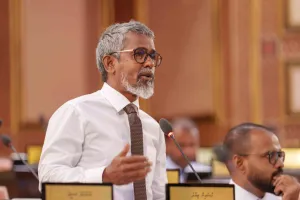
Former Managing Director of Fenaka Ahmed Saeed. -- Adhadhu File Photo

Former Managing Director of Fenaka Ahmed Saeed. -- Adhadhu File Photo

Former Managing Director of Fenaka Ahmed Saeed has been charged with allegedly acting in violation of the company’s rules and making illegal profits in the purchase of an ice plant set up by Kaizan Investment in Laamu Maamendhoo.

The Anti-Corruption Commission (ACC) sent the case against Saeed and Fenaka's former accountant Mohamed Masood to the Prosecutor General's (PG) Office on April 23. The PG office filed charges against Saeed before the end of May.

He is charged with abuse of official status. The basic punishment for this charge is one year, seven months and six days in prison.

The ACC said the Fenaka board decided to buy the ice plant, knowing that it would be a loss-making project. The anti-corruption watchdog concluded that Saeed had given false information to the board.

Fenaka bought the ice plant for MVR 11.2 million. ACC said it is an unusually high price for an ice plant. The valuation of the ice plant was done by Masood, the accountant. Saeed has signed a deal with the company to buy the ice plant at this price.

ACC has requested charges against Saeed in other cases and announced that he was linked to six major ongoing investigations. Saeed has repeatedly denied any acts of corruption while he was in charge of Fenaka.
Comments

Read More

Latest News

Scholars urge government to halt Eagle Hills Rasmalé project

The Scholars’ Union of the Maldives is urging the government to halt the $12 billion Ras Malé project with Eagle Hills. The group claims the deal violates Islamic law and the constitution by potentially allowing non-Muslims to settle permanently. They warn the project could cause irreversible harm to the nation’s religious identity.

Parliament advances Real Estate Bill

The Maldives parliament advanced a bill allowing foreign property buyers to renew 99-year leases indefinitely. By issuing a new lease upon each resale, the law bypasses constitutional limits to boost the real estate market. The bill also formalizes a $12 billion deal with a developer for the Ras Malé project.

Government signs third deal for Ihavandhippolhu

The Maldives government signed a third agreement for the Ihavandhippolhu project, this time with Abu Dhabi’s SAH Group. The deal covers a commercial port and tourism infrastructure for the Maldives Economic Gateway. This follows two previous agreements with foreign firms that have yet to result in any physical work on the site.

Next year’s budget plans no hiring for new posts: Finance

The Maldives finance ministry announced that next year's budget includes no hiring for new positions to ensure economic sustainability. Officials stated that current salaries align with state revenue and that a 10% cap on overtime pay was necessary to prevent debt. No base salaries will be cut under the new pay harmonization framework.

Defamation bill aims to hide government corruption: Fittey

MP Hussain Ziyad criticized a proposed defamation bill, claiming its true purpose is to shield government corruption from public scrutiny. He warned that the bill's vague language and heavy fines, ranging up to MVR 500,000, threaten free speech. Ziyad argued the law mirrors past efforts to suppress reports on government misconduct.

Pension office dismisses COO Shiuna

The Maldives Pension Administration Office dismissed COO Mariyam Shiuna following her suspension in September. Shiuna was reportedly ousted after raising concerns about the chairperson and opposing a government plan to print money through the office. She previously led the Anti-Corruption Commission before joining the agency in 2023.

Defamation bill aims to stifle criticism of Rasmalé deal: Mauroof

MP Mauroof Zakir claims a new defamation bill aims to silence criticism of the Ras Male project and government accountability. The legislation proposes heavy fines and jail time for statements, gestures, or art deemed defamatory. Mauroof argues the bill is a tool to hide corruption and financial mismanagement from public scrutiny.

Newsletter

Get the latest news delivered straight to your inbox